
Excision or Ablation
How Excision Compares and When It Fits
At Endometriosis Center of Excellence in Dallas, Dr. Rachael Haverland and Dr. Katherine Smith treat endometriosis surgically with excision, which cuts the disease out. Ablation, which heats the surface of a lesion, may help some patients with mild disease. A specialist evaluation can help you understand which approach fits your symptoms, imaging and goals.
For patients in the Dallas area weighing surgery, or still in pain after an earlier ablation.

Pain that continues or returns after ablation is a common reason patients seek a second opinion. Ablation treats what the surgeon sees on the surface, so disease that extends deeper may remain. Endometriosis can also recur after any surgery, including excision.
Ongoing pain does not always mean more endometriosis. Adenomyosis, pelvic floor muscle tension, scar tissue, bladder or bowel conditions and nerve sensitization can all play a part, and symptoms alone cannot show which one is driving your pain.
A specialist evaluation looks at your earlier operative and pathology reports, your exam and your imaging. Repeat surgery is one option. Medicine, pelvic floor physical therapy or pain management may also help, alone or alongside surgery.

Ablation uses heat, a laser or another energy source to destroy endometriosis tissue where it sits. It is usually done during laparoscopy, through small incisions, and the treated tissue is burned or vaporized.
For superficial disease, small trials have found similar short-term pain relief after ablation and excision, so ablation can be a reasonable choice for some patients. The limitation is depth. Energy applied to the top of a lesion may not reach disease that extends further, and depth is hard to judge before surgery.
Because ablation destroys the tissue, there is often little left for a pathologist to examine afterward.
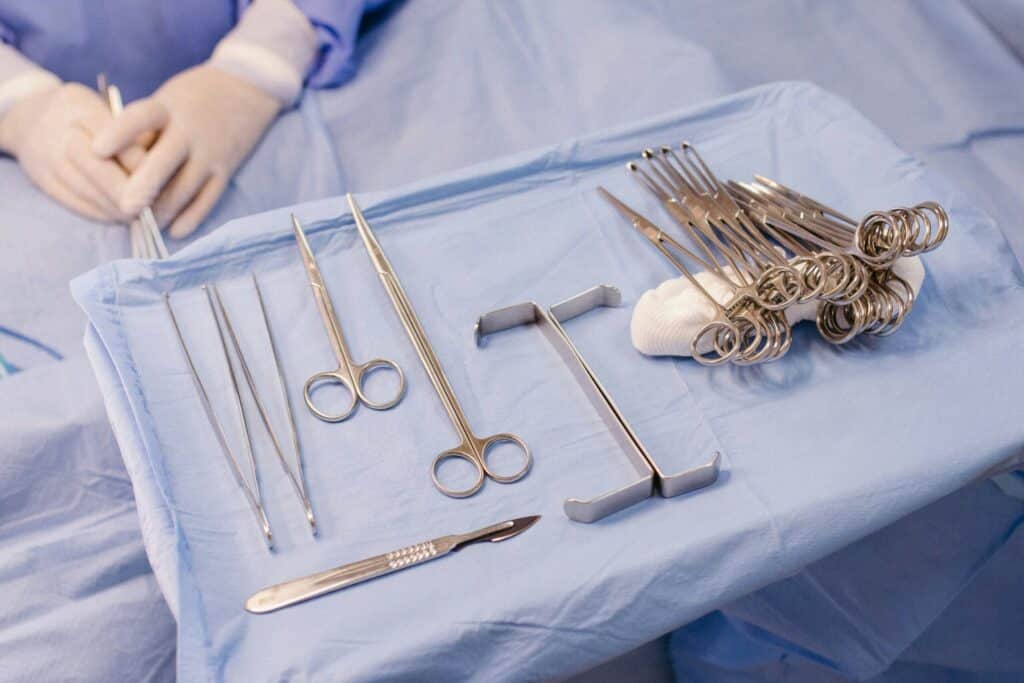
Excision uses laparoscopic or robotic instruments to cut endometriosis away from the surrounding tissue. The surgeon aims to remove each lesion, including any part that extends below the surface, while protecting nearby organs. How much tissue is removed depends on where the disease sits and how deep it goes.
Removed tissue is sent to a pathologist for examination. The report adds to your medical record, though it cannot prove that all disease was removed. On the bowel or near a ureter, the surgeon weighs how much to remove against the risk of injury.
Excision can remove endometriosis that lies below the surface, and the removed tissue can be examined by a pathologist. Many patients have less pain afterward, but results vary, and no surgery can promise that every lesion is found or that pain will not return.
Possible risks include bleeding, infection, anesthesia problems, injury to the bowel, bladder, ureters or blood vessels, and a need to convert to open surgery. When disease is removed from the bowel, there is also a risk of a leak or fistula, and some patients need a temporary stoma.
Limitations matter too. Pain can come from other sources, such as adenomyosis, pelvic floor muscle tension or nerve sensitization, and surgery does not treat all of them. Endometriosis can recur, and some patients need medicine, physical therapy or further surgery later. Your surgeon will talk through how these apply to you before you decide.
The two methods differ in how deep they reach and what they leave for a pathologist to examine. The table describes each method in general terms. Your own outcome depends on where your disease is and how extensive it is.
| Question | Ablation | Excision |
|---|---|---|
| How it treats a lesion | Destroys tissue with heat or other energy | Cuts the lesion away from nearby tissue |
| Deeper disease | May not reach below the surface | Can remove disease below the surface |
| Tissue for the lab | Little or none, since tissue is destroyed | Removed tissue is sent to a pathologist |
| Pain relief for mild disease | Similar to excision in small trials | Similar to ablation in small trials |
| Near the bowel, bladder or ureters | Heat near organs needs great care | Careful removal, with other specialists when needed |
| Recovery | May be quicker at first in some cases | May take longer when more is removed |
Your choice depends on where the disease sits, how deep it appears on imaging and what earlier surgery found. If you had ablation before, bring the operative report and any pathology report to your visit, so your surgeon can explain what excision might add in your case.
Dr. Haverland and Dr. Smith both hold the ABOG Focused Practice Designation in Minimally Invasive Gynecologic Surgery. Excision lets them remove deeper disease and send tissue for examination, and they plan each operation around your disease and your goals.
Excision can remove disease that extends below the surface, where heat may not reach.
Removed tissue goes to a pathologist, giving a tissue diagnosis to guide later care.
Between them, our surgeons excise deep disease on the bowel, bladder, ureters, nerves and diaphragm.
When other organs are involved, they coordinate with colorectal surgery, urology and fertility specialists.
Ask whether they excise, ablate or do both, and how they decide for each patient. Ask how they handle disease near the bowel, bladder or ureters, and whether other specialists join when needed.
These are fair questions for any surgeon, including ours, and the evidence comparing excision and ablation can help you weigh the answers.

Planning starts well before surgery. Your surgeon explains what they expect to find and how they plan to handle it, and also explains that surgery can reveal disease imaging did not show, which may change what is done.
Your symptoms, history, goals and past surgery reports are reviewed.
Exam and imaging help map disease, though imaging can miss some.
Colorectal, urology or fertility specialists join when other organs are involved.
Disease is excised where safe, and tissue goes to a pathologist.
Endometriosis Center of Excellence, at 8140 Walnut Hill Lane, Suite 106, Dallas, TX 75231, is the surgical practice of Dr. Rachael Haverland and Dr. Katherine Smith. Both are board certified by ABOG and hold its Focused Practice Designation in Minimally Invasive Gynecologic Surgery.


Dr. Rachael Haverland
Dr. Katherine Smith
Ablation destroys endometriosis tissue with heat, laser or another energy source. Excision cuts the lesion out, including any part that extends below the surface, and the removed tissue is sent to a pathologist. Ablation usually leaves little tissue to examine.
It depends on the disease. For deeper endometriosis, excision can remove disease that ablation may not reach, and it is generally the recommended surgical approach. For mild surface disease, a 2021 review of four small trials found no clear difference in pain relief between the two and called for larger studies. Ask your surgeon which method they recommend for disease like yours, and why.
Symptoms can return after any treatment for endometriosis, including ablation and excision. With ablation, one concern is that disease below the surface may stay behind. If your pain returned after ablation, a specialist can review what was done, examine you and look at imaging to help find the cause. Repeat surgery is one option among several.
Excision may take longer to recover from in some cases, especially when more tissue is removed. Recovery depends mostly on how much disease there is, where it sits and whether other organs are involved. Your surgeon gives you a plan for rest, activity and follow-up after surgery.
A pathologist examines removed tissue under a microscope. This can support the diagnosis and may show other conditions, but it cannot show that every lesion was removed, and a negative result does not always rule out endometriosis. Many patients can also be diagnosed without surgery, based on their history, exam and ultrasound or MRI.
Risks include bleeding, infection, anesthesia problems, injury to the bowel, bladder, ureters or blood vessels, and conversion to open surgery. Bowel surgery adds a risk of leak or fistula, and some patients need a temporary stoma. Your surgeon will explain which risks apply to your planned operation.
You can book by calling our Dallas office or using the online form. At your visit, Dr. Haverland or Dr. Smith can review your symptoms and records and explain whether excision, another treatment or further testing makes sense for you. Bring any past surgery and pathology reports.