

Endometriosis may persist or first become noticeable after menopause when residual pelvic lesions remain active or are re-stimulated by local or systemic sources of estrogen. Below, we explain how postmenopausal endometriosis commonly presents, why lesions can cause symptoms after ovarian hormone cessation, and provide clear next steps for diagnosis and treatment, including when to seek specialist care. You’ll learn about pelvic, bowel, and bladder symptoms that overlap with menopausal complaints, how clinicians evaluate postmenopausal pelvic pain, and the roles of surgery and medical treatments such as aromatase inhibitors. We also cover recurrence versus new-onset disease, how hormone replacement therapy (HRT) factors into decisions, and risk elements for malignant change. The sections that follow review common symptoms, the likelihood of recurrence or de novo disease, diagnostic evaluation, and an evidence-based comparison of treatments so you can spot red flags and pursue the right care.
What Are the Common Symptoms of Endometriosis After Menopause?

In postmenopausal patients, endometriosis most often shows up as ongoing pelvic pain, focal nodularity, or masses, findings that reflect residual or active implants. Local estrogen produced by adipose tissue or by lesion aromatase can keep the disease active even after ovarian function ends. Noting symptoms that differ from generalized menopausal discomfort helps prioritize imaging and specialist evaluation, especially when complaints are focal, progressive, or accompanied by bleeding or an adnexal mass. Below are the most common presentations to watch for.
- Persistent or localized pelvic / lower abdominal pain that may be worse with sitting or during bowel movements.
- New or progressive painful intercourse (dyspareunia) after menopause.
- Bowel symptoms — pain with defecation, constipation, or visible blood in the stool.
- Urinary symptoms — increased frequency, burning (dysuria), or blood in the urine when bladder lesions are involved.
- Unexplained postmenopausal vaginal bleeding or spotting requires prompt evaluation.
- Palpable pelvic mass or imaging that suggests an ovarian cyst consistent with an endometrioma.
The table below contrasts symptom clusters by organ system, highlighting their differences from typical menopausal complaints.
Overall, focal, progressive, or bleeding symptoms warrant targeted imaging and specialist assessment rather than assuming routine menopausal origin.
Which Pelvic Pain and Discomfort Should Postmenopausal Women Watch For?
Pelvic pain from postmenopausal endometriosis is often more focal and persistent than the generalized pelvic discomfort many women describe with menopause. Pain commonly corresponds to lesion sites such as the uterosacral ligaments or pelvic sidewall. Patients may notice pain that intensifies with sitting, during or after intercourse, or with bowel movements; clinicians may find palpable nodularity or localized tenderness on exam. Separating neuropathic, musculoskeletal, and visceral sources requires a focused history, directed physical exam, and consideration of imaging when pain is progressive. Early recognition helps guide timely imaging and referral to a specialist surgeon when needed.
How Do Bowel and Bladder Issues Manifest in Postmenopausal Endometriosis?
When lesions involve the bowel or bladder, they can mimic common gastrointestinal or urologic conditions; however, patterns often point to lesion-related disease, pain tied to function, and occasional bleeding. Bowel endometriosis can cause constipation, tenesmus, or pain with defecation; visible blood in the stool or a change in stool caliber are red flags for deeper disease. Bladder involvement may present with frequency, urgency, dysuria, or hematuria that does not resolve with standard UTI treatment and should prompt further evaluation, such as cystoscopy or pelvic MRI.
If bleeding, obstructive symptoms, or progressive pain occur, expedited imaging and specialist consultation are appropriate.
Radiologists play a key role in identifying postmenopausal endometriosis, which can present with varied and sometimes misleading symptoms.
Can Endometriosis Develop or Recur After Menopause?
Yes — endometriosis can recur and, less commonly, arise de novo after menopause. Key drivers include local estrogen production, body adiposity, and exposure to exogenous estrogen. Although postmenopausal endometriosis is uncommon, it is clinically important because presentations may be atypical and carry different risk considerations, including a small risk of malignant transformation for some lesion types. Determining whether the disease represents recurrence of known endometriosis or new-onset lesions affects surveillance, surgical planning, and HRT counseling.
- Known residual disease: implants left after prior surgery can reactivate.
- Exogenous estrogen exposure: unopposed estrogen therapy may stimulate dormant lesions.
- Peripheral aromatase: adipose tissue and lesion aromatase produce local estrogen that can support lesion growth.
Recognizing these contributors underscores the importance of individualized risk assessment and tailored follow-up for postmenopausal women.
What Causes New Onset Endometriosis After Menopause?
De novo endometriosis after menopause may be driven by peripheral estrogen produced in adipose tissue and local aromatase activity within lesions, immune changes, or previously microscopic disease that becomes clinically evident later. Obesity raises peripheral estrogen levels and the potential for lesion activity, while exogenous estrogen can unmask symptoms by stimulating residual implants. Clinically, someone without a prior diagnosis may present with focal pelvic pain, a new ovarian mass, or unexplained bleeding, situations that usually prompt imaging and often tissue diagnosis. Understanding these mechanisms helps clinicians assess risk and discuss management options, including when surgical diagnosis is appropriate.
Although less common than in premenopausal women, postmenopausal endometriosis can mimic other serious conditions and may be diagnostically challenging.
How Does Hormone Replacement Therapy Affect Endometriosis Recurrence?
HRT can reactivate dormant endometriosis when unopposed estrogen is used. When HRT is necessary for symptom control, combined estrogen–progestogen regimens or adding progestins are often considered to reduce stimulation of implants. The decision to start or continue HRT should balance vasomotor and bone-health benefits against the potential for symptom recurrence and is best made with individualized specialist input. Non-hormonal alternatives or lower-dose, combined strategies may help minimize lesion stimulation while managing menopausal symptoms. Shared decision-making and careful follow-up after initiating HRT lowers the risk of unrecognized disease progression.
How Is Postmenopausal Endometriosis Diagnosed and Evaluated?
Evaluation starts with a careful history and pelvic exam to look for focal tenderness or nodularity, followed by targeted imaging when findings suggest lesion involvement. Diagnostic laparoscopy with biopsy remains the gold standard for a definitive diagnosis and histologic assessment. Transvaginal ultrasound is useful for ovarian endometriomas, while pelvic MRI is preferred for mapping deep infiltrating disease. Sensitivity varies by lesion type and operator expertise. When malignancy is a concern, for example, with an enlarging mass or postmenopausal bleeding, tissue diagnosis via minimally invasive surgery with pathology is essential to guide oncology involvement.
The table below compares common diagnostic tools, their primary purpose, and typical indications.
In short, imaging helps guide planning, but laparoscopy with tissue sampling provides definitive answers and informs treatment choices.
What Diagnostic Tools Are Used for Postmenopausal Endometriosis?
Transvaginal ultrasound is frequently the initial imaging test to evaluate ovarian cysts and pelvic masses; it is widely available and effective for identifying endometriomas but has limited sensitivity for deep infiltrating disease. Pelvic MRI provides superior soft-tissue contrast, helping to map deep lesions and assess the involvement of bowel, bladder, or pelvic sidewall structures, which provides valuable information to support surgical planning. Diagnostic laparoscopy with biopsy confirms the diagnosis and allows for immediate management when appropriate, making it the diagnostic gold standard when imaging is inconclusive or when malignancy cannot be excluded. Tumor markers may be used selectively, but they do not replace tissue diagnosis when malignancy is a concern.
When Should You Seek Expert Care for Postmenopausal Symptoms?
Seek urgent evaluation for postmenopausal bleeding, a rapidly enlarging pelvic mass, or persistent pain accompanied by obstructive bowel or urinary symptoms; these raise concern for malignancy or significant lesion progression. Routine specialist referral is appropriate for focal, progressive pain that does not respond to conservative measures, new or concerning imaging findings, or when HRT decisions require individualized risk–benefit discussion in the context of prior endometriosis. Coordinated care with gynecologic oncology may be necessary when malignancy is suspected; pelvic pain specialists, colorectal surgeons, and urology colleagues can aid multidisciplinary management of bowel or bladder involvement. Early referral to an experienced team shortens time to diagnosis and improves outcomes.
What Are the Treatment Options for Endometriosis After Menopause?
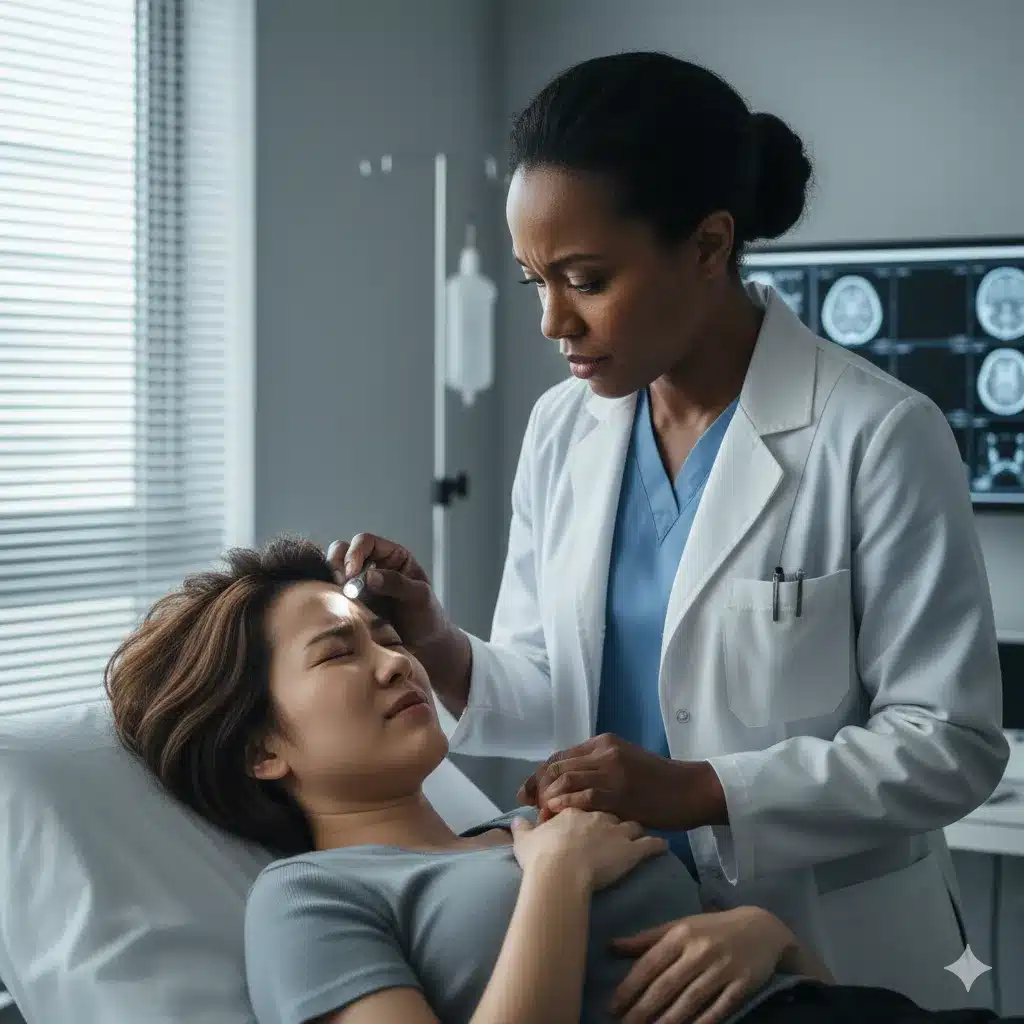
Treatment goals are symptom relief, removal of suspicious or bulky disease, and reduction of the small but real risk of malignant transformation. Surgical excision is often considered the definitive approach in symptomatic postmenopausal disease because it removes visible implants and provides tissue for histologic evaluation. Medical options such as aromatase inhibitors can lower local estrogen production and may be used when surgery is not feasible or as adjunctive therapy, though side effects and bone-health implications must be considered. Non-hormonal pain management and multidisciplinary rehabilitation (pelvic floor therapy, pain specialists) support quality of life whether or not definitive surgery is pursued.
This summary clarifies that excision often provides both treatment and diagnosis, while medical therapies have roles when surgery is not possible or as interim measures.
Why Is Excision Surgery Considered the Gold Standard for Postmenopausal Endometriosis?
Excision surgery aims to remove all visible disease, secure tissue for histologic diagnosis, and relieve symptoms. In postmenopausal patients, it also addresses malignancy risk by allowing pathological evaluation of suspicious lesions. Compared with ablation or medical therapy alone, complete excision tends to reduce recurrence and gives clearer margins for pathology review, which is significant when lesions are atypical or enlarging. Minimally invasive approaches performed by surgeons experienced in complex excision and adhesion management support faster recovery and better functional outcomes. For those considering definitive surgery, referral to an experienced multidisciplinary center increases the chance of complete resection and appropriate follow-up.
What Medical Therapies Are Available Besides Surgery?
Medical approaches in postmenopausal endometriosis aim to lower local estrogen production and control symptoms; aromatase inhibitors are particularly relevant because they reduce peripheral estrogen synthesis that can sustain lesions.
Aromatase inhibitors are an emerging medical option for postmenopausal endometriosis, a potential alternative or adjunct to surgery, but one that requires careful monitoring for side effects.
GnRH analogues or progestogens may be considered selectively, but side-effect profiles and postmenopausal physiology limit their routine use in older patients.
Non-hormonal strategies, neuropathic pain agents, pelvic floor rehabilitation, and other supportive measures play an important role in symptom control and quality-of-life support, especially when surgery must be delayed or is not an option.
A multidisciplinary plan that combines medical therapy, symptom management, and surveillance provides individualized care while monitoring for recurrence or malignant change.
Frequently Asked Questions
What lifestyle changes can help manage endometriosis symptoms after menopause?
Lifestyle steps can support symptom control. Regular physical activity can often reduce pelvic pain and improve overall well-being. A balanced, anti-inflammatory diet, rich in fruits, vegetables, whole grains, and omega-3 fatty acids, may help lower the symptom burden. Maintaining a healthy weight is important because excess adipose tissue produces estrogen that can stimulate lesions. Stress-reduction techniques, such as yoga, mindfulness, or breathing exercises, can also help by reducing pain sensitivity and improving coping mechanisms.
Are there any alternative therapies for postmenopausal endometriosis?
Some alternative approaches may provide symptom relief. Acupuncture has helped some women reduce pain and improve their quality of life. Some patients use anti-inflammatory supplements or herbs (for example, turmeric), but evidence is limited, and interactions with medications are possible. Always discuss complementary therapies with your clinician before starting them. A combined plan that integrates safe complementary options with conventional care is often most effective.
How can I differentiate between endometriosis symptoms and other conditions?
Symptoms overlap with many gastrointestinal and urinary conditions, which makes differentiation challenging. Red flags for endometriosis include persistent pelvic pain that worsens with bowel movements or intercourse, unexplained postmenopausal bleeding, focal or progressive pain, and new pelvic masses. A careful history, targeted physical exam, and appropriate imaging (ultrasound or MRI) help clarify the cause and rule out other diagnoses.
What role does diet play in managing endometriosis after menopause?
Diet can influence inflammation and overall health, which in turn affects symptom burden. Eating whole foods, vegetables, fruits, lean proteins, whole grains, and healthy fats, and limiting processed foods, refined sugars, and trans fats may be beneficial. Some people find a Mediterranean-style diet beneficial due to its anti-inflammatory properties. Staying hydrated and maintaining a healthy weight are practical dietary goals that can help improve symptoms.
What should I do if I experience new symptoms after menopause?
If you notice new or worsening symptoms after menopause, such as pelvic pain, abnormal bleeding, or changes in bowel or bladder habits, seek medical evaluation promptly. These signs may indicate endometriosis or another condition that requires further investigation. A clinician can perform a focused assessment, including pelvic exam and imaging, and recommend appropriate next steps. Early evaluation supports timely diagnosis and better outcomes.
Can endometriosis lead to other health complications after menopause?
Yes. Chronic pelvic pain can significantly affect daily function and mental health, contributing to anxiety or depression. There is a small risk of malignant transformation in some endometriotic lesions, particularly after menopause. Lesion invasion of bowel or bladder can cause obstructive problems or persistent urinary issues. Regular follow-up with a healthcare provider helps monitor for complications and guide management.
Conclusion
Knowing what endometriosis can look like after menopause helps you recognize concerning signs and pursue timely care. Focal, progressive, or bleeding symptoms deserve targeted evaluation, and management often benefits from specialist input and a multidisciplinary plan. If you or someone you care for has new or worsening pelvic symptoms after menopause, consider consulting a clinician for personalized assessment and next steps. Explore our resources to learn more about managing endometriosis and related health concerns.