

Sciatic endometriosis is a rare but important form of deep endometriosis that can affect the sciatic nerve or nearby pelvic nerves. Instead of causing only pelvic pain or painful periods, this type of endometriosis may cause symptoms that feel like sciatica, including pain that travels into the buttock, hip, back of the thigh, calf, or foot.
Because these symptoms can look similar to spine, hip, or muscle-related conditions, sciatic endometriosis is often difficult to recognize. One important clue is whether nerve pain worsens around menstruation or occurs alongside other endometriosis symptoms, such as pelvic pain, painful periods, pain with sex, bowel symptoms, bladder symptoms, or infertility concerns.
At the Endometriosis Center of Excellence, evaluation focuses on identifying whether symptoms may be related to deep endometriosis, pelvic nerve involvement, or another condition that requires a different treatment approach.
What Is Sciatic Endometriosis?

Sciatic endometriosis occurs when endometriosis lesions involve, irritate, compress, or grow near the sciatic nerve or related pelvic nerve structures. The sciatic nerve is the largest nerve in the body. It begins in the lower back and pelvis, then travels through the buttock and down the back of the leg.
When endometriosis affects tissue near this nerve, it may cause inflammation, scarring, compression, or direct nerve irritation. This can lead to pain that radiates from the pelvis or buttock into the leg. In more advanced cases, patients may also experience numbness, tingling, weakness, or difficulty walking.
Sciatic endometriosis is uncommon, but it should be considered when sciatica-like symptoms are cyclic, progressive, unexplained, or occur with other signs of endometriosis.
How Can Endometriosis Affect the Sciatic Nerve?
Endometriosis can affect the sciatic nerve in several ways. Lesions may develop near the nerve, around pelvic sidewall structures, or in areas where deep infiltrating endometriosis causes inflammation and fibrosis. Over time, this can irritate nearby nerves or place pressure on them.
Symptoms may be mild at first and become more noticeable around the menstrual cycle. Some patients describe sharp, burning, electric, or shooting pain. Others report heaviness, tingling, numbness, weakness, or pain that limits sitting, walking, standing, or exercise.
Because nerve-related symptoms can have many causes, careful evaluation is essential. Sciatic endometriosis should not be assumed without considering other possible causes, including disc disease, spinal nerve compression, piriformis syndrome, hip disorders, pelvic floor dysfunction, or musculoskeletal pain. For more detail, see our article Thoracic Endometriosis: Identifying Causes of Chest Pain.
Common Symptoms of Pelvic Nerve Endometriosis
Symptoms vary depending on the location and severity of nerve involvement. Possible symptoms include:
- Radiating leg pain: Pain may travel from the pelvis, buttock, or hip down the back of the thigh, calf, or foot.
- Buttock or hip pain: Some patients feel deep gluteal, pelvic sidewall, or hip-region pain.
- Numbness or tingling: Nerve irritation may cause pins-and-needles sensations or reduced sensation in the leg or foot.
- Leg weakness: Weakness may affect walking, climbing stairs, standing, or daily activity.
- Cyclic sciatica: Pain may worsen before or during menstruation, which can be an important diagnostic clue.
- Gait changes: Severe cases may cause limping, difficulty bearing weight, or changes in how the patient walks.
Patients should seek urgent medical evaluation for sudden or worsening leg weakness, foot drop, loss of bladder or bowel control, or numbness in the groin or saddle area, as these symptoms can indicate serious nerve involvement or another urgent condition.
When Should Patients Suspect Sciatic Endometriosis?
Sciatic endometriosis is rare, and most leg pain is not caused by endometriosis. However, patients may need further evaluation when sciatica-like symptoms appear with a clear menstrual pattern or occur alongside other signs of endometriosis.
Patients may want to discuss sciatic endometriosis with a specialist if they experience:
- Leg, hip, or buttock pain that worsens before or during menstruation
- Pain that radiates from the pelvis or buttock down the back of the leg
- Numbness, tingling, burning, or electric-like sensations in the leg or foot
- Leg weakness, limping, or difficulty walking
- Sciatica-like pain that does not improve with standard spine, hip, or muscle treatments
- Nerve symptoms along with pelvic pain, painful periods, pain with sex, bowel symptoms, or bladder symptoms
Because sciatic endometriosis can be difficult to identify, a detailed symptom history is important. Tracking when symptoms occur, whether they worsen with the menstrual cycle, and how they affect walking, sitting, sleep, or daily activity can help guide the diagnostic process.
Conditions That Can Mimic Sciatic Endometriosis
Sciatic endometriosis can resemble several more common conditions. This is one reason diagnosis may be delayed, especially when symptoms are treated only as a spine, hip, or muscle problem.
Conditions that may cause similar symptoms include:
- Herniated disc or spinal nerve compression: May cause lower back pain, radiating leg pain, numbness, tingling, or weakness.
- Piriformis syndrome: Can irritate the sciatic nerve and cause buttock pain or pain that travels down the leg.
- Hip disorders: Labral tears, arthritis, or joint inflammation may cause hip, groin, buttock, or thigh pain.
- Sacroiliac joint dysfunction: Can cause lower back, pelvic, buttock, or radiating leg pain.
- Pelvic floor dysfunction: Tight or overactive pelvic floor muscles may contribute to pelvic pain, hip pain, and nerve-like symptoms.
- Peripheral neuropathy: Nerve conditions outside the spine may cause burning, tingling, numbness, or weakness in the legs or feet.
- Muscle or soft tissue injuries: Strains, tendon problems, or chronic muscle tension can create pain patterns that overlap with nerve pain.
A careful evaluation helps determine whether symptoms are related to endometriosis, another condition, or multiple contributing factors. In some cases, patients may need both pelvic imaging and spine or musculoskeletal evaluation to identify the source of pain.
How Is Sciatic Endometriosis Diagnosed?
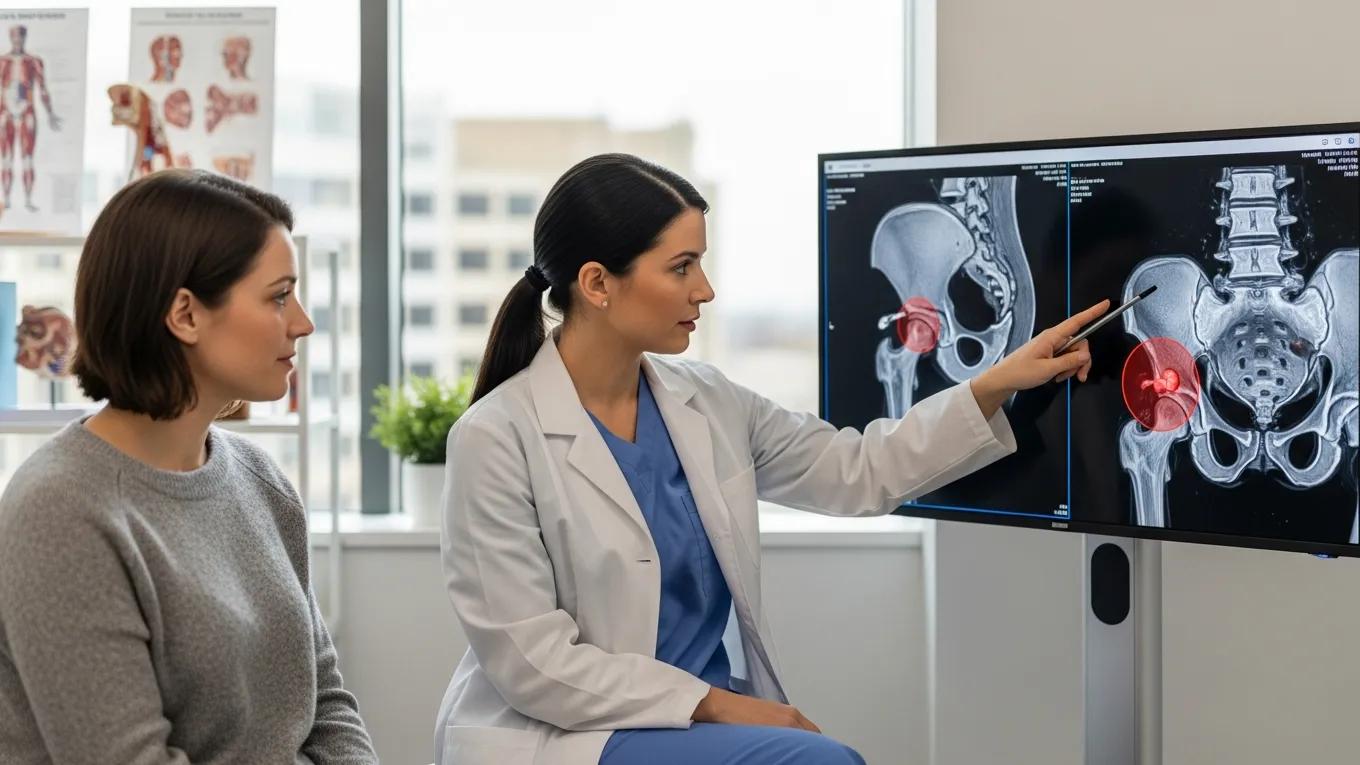
Diagnosing sciatic endometriosis requires a careful review of symptoms, medical history, physical findings, and imaging. Because sciatic endometriosis can mimic common causes of sciatica, such as disc disease, piriformis syndrome, hip problems, or pelvic floor dysfunction, the diagnostic process should look at both gynecologic and nerve-related symptoms.
A key clue is whether leg pain, buttock pain, numbness, tingling, or weakness worsens around the menstrual cycle or occurs with other symptoms of endometriosis, such as pelvic pain, painful periods, pain with sex, bowel symptoms, or bladder symptoms.
Imaging for Nerve-Involved Endometriosis
Imaging can help identify deep endometriosis and evaluate whether lesions may be affecting the sciatic nerve or nearby pelvic nerves. The most useful imaging test is often a pelvic MRI with attention to deep infiltrating endometriosis and pelvic nerve anatomy.
Common imaging tools may include:
- Pelvic MRI: Often the preferred imaging study when nerve-involved endometriosis is suspected. It can help show deep lesions, scarring, and the relationship between endometriosis and nearby pelvic structures.
- Ultrasound: May help evaluate ovarian endometriomas, pelvic masses, or other gynecologic findings, but it may not fully assess pelvic nerve involvement.
- Lumbar spine imaging: May be recommended if symptoms could be related to disc disease or spinal nerve compression.
- CT scan: Not usually the first choice for diagnosing endometriosis, but it may be used in selected cases to evaluate other causes of pain or complex anatomy.
A standard spine MRI may not detect pelvic nerve endometriosis. Patients with cyclic sciatica-like symptoms may need pelvic imaging reviewed by clinicians familiar with deep endometriosis and pelvic nerve involvement.
Clinical Evaluation and Multidisciplinary Planning
A thorough clinical evaluation helps determine whether symptoms are more likely related to endometriosis, a spine condition, a musculoskeletal issue, or another source of nerve pain. This evaluation may include:
- Detailed symptom history: Timing of pain, menstrual pattern, location of symptoms, numbness, tingling, weakness, bowel or bladder symptoms, and prior treatments.
- Medical and surgical history: Prior endometriosis diagnosis, pelvic surgery, imaging results, fertility history, and response to hormonal therapy or pain treatments.
- Physical examination: Assessment of pelvic pain, tenderness, mobility, neurologic symptoms, and possible musculoskeletal contributors.
- Specialist coordination: Collaboration with radiology, pelvic floor physical therapy, pain management, neurology, urology, colorectal surgery, or other specialists when needed.
This process helps create a more accurate diagnosis and a treatment plan tailored to the patient’s symptoms, anatomy, severity of disease, and long-term goals.
What Are the Treatment Options for Endometriosis Nerve Pain?

Treatment for sciatic endometriosis depends on symptom severity, imaging findings, nerve involvement, prior treatments, fertility goals, and whether endometriosis is present elsewhere in the pelvis. Because nerve-related symptoms can become progressive, care should be individualized and guided by a team experienced in complex endometriosis.
Treatment may include medical management, pain control, pelvic floor physical therapy, surgical evaluation, or a combination of approaches.
Laparoscopic Excision Surgery for Sciatic Endometriosis
When endometriosis lesions involve or compress the sciatic nerve or nearby pelvic nerves, laparoscopic excision surgery may be considered. The goal of excision is to carefully remove endometriosis while protecting the nerve, blood vessels, bowel, bladder, ureters, and surrounding pelvic structures.
Surgery for sciatic endometriosis is highly specialized. Deep endometriosis near the sciatic nerve can be difficult to access and may require advanced pelvic anatomy knowledge, careful nerve-sparing technique, and multidisciplinary planning. In selected patients, excision may help reduce pain, improve mobility, and prevent worsening nerve-related symptoms.
Potential benefits of minimally invasive excision may include:
- Smaller incisions compared with open surgery
- Less incision-related discomfort
- Shorter hospital stay in many cases
- Careful removal of visible endometriosis lesions
- Improved pain and function for selected patients
However, outcomes vary. Patients should discuss the expected benefits, risks, recovery timeline, and possible need for specialist coordination before surgery.
Medical Management and Symptom Relief for Pelvic Nerve Endometriosis
Medical treatment may help reduce inflammation, hormonal stimulation of endometriosis, and pain symptoms. It may be used before surgery, after surgery, or when surgery is not the preferred option. For more detail, see our article Chest & Shoulder Pain During Your Period? Understanding Diaphragmatic and Thoracic Endo.
Options may include:
- Hormonal therapy: Birth control pills, progestins, GnRH medications, or other hormonal options may help reduce cyclic pain and endometriosis-related inflammation.
- Pain management: NSAIDs, nerve pain medications, or other pain strategies may be recommended depending on symptom type and severity.
- Pelvic floor physical therapy: Physical therapy may help address muscle guarding, pelvic floor dysfunction, mobility changes, and pain patterns that develop alongside nerve-related symptoms.
- Multidisciplinary care: Patients with complex symptoms may benefit from coordination with pain management, neurology, physical therapy, urology, colorectal surgery, or fertility specialists.
Medical therapy can help manage symptoms, but it may not remove a lesion that is compressing or invading a nerve. For this reason, persistent leg pain, numbness, weakness, or progressive neurologic symptoms should be evaluated carefully.
Why Choose the Endometriosis Center of Excellence for Sciatic Endometriosis Care?

Sciatic endometriosis is rare, complex, and often difficult to diagnose. Patients may be told their symptoms are caused by routine sciatica, a spine condition, hip pain, or muscle strain before endometriosis is considered. The Endometriosis Center of Excellence provides specialized evaluation for patients with suspected deep endometriosis, pelvic nerve involvement, and symptoms such as cyclic leg pain, buttock pain, numbness, tingling, or weakness. For more detail, see our article Leg Pain and Shooting Sciatica During Your Period.
Care is focused on identifying the source of symptoms, reviewing imaging carefully, and creating a treatment plan based on each patient’s anatomy, pain pattern, prior treatments, and long-term goals.
Dr. Rachael Haverland’s Experience in Complex Endometriosis Care
Dr. Rachael Haverland provides advanced care for patients with endometriosis, including complex cases that may involve deep pelvic disease or nerve-related symptoms. Her approach emphasizes detailed evaluation, patient education, and individualized treatment planning.
For patients with suspected sciatic endometriosis, this may include careful review of symptoms, pelvic imaging, prior surgical records, and whether additional specialists should be involved. Because nerve-involved endometriosis can be technically challenging, patients should discuss surgical experience, risks, expected recovery, and all appropriate treatment options during consultation.
Multidisciplinary Care for Complex Endometriosis Symptoms
Sciatic endometriosis may affect more than the pelvis. It can involve nerve pain, mobility limitations, pelvic floor dysfunction, bowel or bladder symptoms, fertility concerns, and emotional stress related to chronic pain.
A multidisciplinary approach allows care to be coordinated around the full symptom picture. Depending on the patient’s needs, this may include pelvic floor physical therapy, pain management, radiology, neurology, urology, colorectal surgery, fertility care, or other specialists.
This coordinated model helps patients receive a more complete evaluation and a personalized care plan focused on symptom relief, function, safety, and long-term quality of life.
What Are the Expected Outcomes and Recovery After Excision Surgery?

Recovery after excision surgery for sciatic endometriosis depends on the severity of disease, the extent of nerve involvement, the organs affected, and the procedures performed. Because sciatic endometriosis can involve delicate pelvic nerves, recovery may be more individualized than recovery from routine laparoscopic surgery.
The goals of treatment may include reducing pain, improving mobility, protecting nerve function, and addressing endometriosis in the pelvis. Outcomes vary, especially when symptoms have been present for a long time or when there is significant nerve irritation, scarring, or weakness before surgery.
Recovery Timeline Following Nerve-Involved Endometriosis Surgery
A general recovery timeline may include:
- First few days: Patients may experience fatigue, soreness, bloating, incision discomfort, and nerve-related pain fluctuations.
- 1–2 weeks: Some patients may return to light daily activities, depending on the extent of surgery and symptom control.
- 4–6 weeks: Many patients are gradually cleared for more normal activity, though heavy lifting, intense exercise, and intercourse should wait until the surgeon confirms it is safe.
- Longer-term recovery: Nerve healing can take longer than incision healing. Patients with numbness, weakness, gait changes, or extensive deep endometriosis may need additional recovery time, physical therapy, or pain-management support.
Patients should follow their personalized postoperative instructions and attend follow-up visits to monitor healing, neurologic symptoms, and long-term treatment needs.
Impact on Pain, Mobility, Fertility, and Quality of Life
For selected patients, excision of sciatic or pelvic nerve endometriosis may help reduce radiating leg pain, buttock pain, pelvic pain, and nerve-related symptoms. Some patients also experience improved walking, sitting tolerance, sleep, and daily function over time.
However, results are not immediate or guaranteed. Nerve symptoms may improve gradually, and some patients may continue to need pelvic floor physical therapy, pain management, hormonal suppression, or rehabilitation after surgery.
Fertility outcomes depend on the full pattern of endometriosis, not sciatic involvement alone. If endometriosis also affects the ovaries, fallopian tubes, uterus, or pelvic anatomy, fertility goals should be discussed before surgery so the treatment plan can account for reproductive priorities.
Frequently Asked Questions
Can endometriosis cause leg pain?
Yes. In rare cases, endometriosis can irritate or involve pelvic nerves, including the sciatic nerve. This may cause pain that travels from the pelvis, buttock, or hip down the back of the thigh, calf, or foot.
What does sciatic endometriosis feel like?
Sciatic endometriosis may feel like sharp, burning, electric, or shooting pain that radiates down the leg. Some patients also experience numbness, tingling, weakness, buttock pain, hip pain, or difficulty walking. Symptoms may worsen before or during menstruation.
Is sciatic endometriosis the same as regular sciatica?
No. Regular sciatica is often caused by spine-related issues, such as a herniated disc or nerve compression in the lower back. Sciatic endometriosis is related to endometriosis affecting or irritating the sciatic nerve or nearby pelvic nerves. Because the symptoms can overlap, careful evaluation is important.
How is sciatic endometriosis diagnosed?
Diagnosis usually involves a detailed symptom history, pelvic exam, review of prior treatments or surgeries, and imaging. A pelvic MRI focused on deep infiltrating endometriosis and pelvic nerve anatomy may be helpful. Some patients may also need spine imaging to rule out more common causes of sciatica.
Can a spine MRI miss sciatic endometriosis?
Yes. A lumbar spine MRI looks mainly at the lower back, discs, and spinal nerves. It may not fully evaluate the pelvis, sciatic nerve pathway, or deep pelvic endometriosis. If symptoms are cyclic or occur with pelvic pain, a pelvic MRI may be recommended.
What are warning signs that need urgent evaluation?
Patients should seek urgent medical care for sudden or worsening leg weakness, foot drop, loss of bladder or bowel control, numbness in the groin or saddle area, or severe new neurologic symptoms. These symptoms may indicate serious nerve involvement or another urgent condition.
What treatments are available for sciatic endometriosis?
Treatment may include hormonal therapy, pain management, pelvic floor physical therapy, rehabilitation, surgical evaluation, or laparoscopic excision. The right plan depends on symptom severity, imaging findings, nerve involvement, fertility goals, and whether endometriosis is present elsewhere in the pelvis.
Does sciatic endometriosis always require surgery?
No. Not every patient needs surgery. Medical management may help reduce cyclic pain and inflammation for some patients. Surgery may be considered when symptoms are severe, progressive, associated with neurologic deficits, or when imaging suggests endometriosis involving or compressing pelvic nerves.
How long is recovery after sciatic endometriosis surgery?
Recovery depends on the extent of surgery and nerve involvement. Some patients return to light activity within 1–2 weeks, while more complex cases may require a longer recovery period. Nerve healing can take longer than incision healing, and some patients may benefit from physical therapy or pain-management support. For more detail, see our article Chest Pain, Shoulder Aches, and Your Period: Could It Be Diaphragmatic Endometriosis.
Can sciatic endometriosis affect fertility?
Sciatic endometriosis itself is usually discussed in relation to pain and nerve symptoms. Fertility may be affected if endometriosis is also present around the ovaries, fallopian tubes, uterus, or other pelvic structures. Patients with fertility goals should discuss this before treatment planning.
Seek urgent medical care if you develop sudden or worsening leg weakness, foot drop, loss of bladder or bowel control, numbness in the groin or saddle area, or severe new neurologic symptoms. These symptoms may indicate serious nerve compression or another urgent medical condition. If you have questions about your own symptoms, you can schedule an appointment with our endometriosis specialists.