
Endometriosis can affect more than pelvic comfort. For some patients, it may also raise questions about future fertility, especially when ovarian endometriomas, reduced ovarian reserve, prior surgery, or planned ovarian surgery are part of the picture. If pregnancy is not part of your immediate plans, long-term egg storage for fertility may be worth discussing with your care team.
Egg storage, also called egg freezing or oocyte cryopreservation, allows mature eggs to be collected, frozen, and stored for possible future use with IVF. For patients with endometriosis, this option may be considered as part of a broader fertility preservation plan, particularly when there are concerns about ovarian health or the timing of treatment.
Long-term egg storage does not guarantee a future pregnancy, but it may help preserve more reproductive options. The right timing depends on factors such as your age, ovarian reserve, endometriosis severity, surgical history, symptoms, and future family-building goals.
At Endometriosis Center of Excellence, Dr. Rachael Haverland helps patients understand how endometriosis may affect fertility and whether egg freezing should be part of their long-term care plan. This guide explains how long-term egg storage works, why it may matter for endometriosis patients, and what to ask before making a decision.
Why Long-Term Egg Storage Matters for Endometriosis Patients
Endometriosis can affect fertility in different ways. Some patients are able to get pregnant naturally, while others may experience challenges related to inflammation, scar tissue, ovarian endometriomas, reduced ovarian reserve, or previous pelvic surgery.
For patients who are not ready to become pregnant now, long-term egg storage may offer a way to preserve eggs for possible future use. This can be especially important if endometriosis is affecting the ovaries or if surgery involving the ovaries may be considered.
Egg storage is not necessary for every person with endometriosis. However, discussing fertility preservation early can help you understand your options before age, ovarian reserve, or treatment decisions make planning more difficult.
How Endometriosis May Affect Fertility
Endometriosis may affect fertility by causing inflammation in the pelvis, scar tissue, or changes around the ovaries and fallopian tubes. In some patients, ovarian endometriomas can also affect ovarian tissue and may be linked with lower ovarian reserve.
Ovarian reserve refers to the estimated number of eggs remaining in the ovaries. It does not directly predict whether you can get pregnant naturally, but it can help guide fertility planning and decisions about egg freezing.
Why Timing Can Be Important
Timing matters because egg quality and quantity generally decline with age. For patients with endometriosis, timing may also be influenced by ovarian endometriomas, previous surgery, planned ovarian surgery, or changes in ovarian reserve testing.
If surgery is being considered, especially surgery involving the ovaries, your doctor may recommend discussing fertility preservation before the procedure. This does not mean every patient needs egg freezing, but it gives you the chance to understand the benefits, limits, and timing of your options.
What Egg Storage Can and Cannot Do
Long term egg storage may help preserve future fertility options by freezing eggs at your current age. These eggs may later be thawed, fertilized with sperm, and used in IVF.
However, egg freezing does not guarantee pregnancy or a live birth. Future success depends on several factors, including your age at freezing, the number of mature eggs stored, egg survival after thawing, fertilization, embryo development, uterine health, sperm quality, and overall reproductive health at the time you use the eggs.
What Is Long Term Egg Storage for Fertility?

Long term egg storage for fertility is the process of freezing mature eggs and storing them for possible future use. It is also called egg freezing or oocyte cryopreservation.
The process usually involves fertility testing, hormone injections to help several eggs mature, monitoring with blood tests and ultrasound, egg retrieval under sedation, and freezing the mature eggs in a fertility lab. The frozen eggs are then stored until you decide whether to use them in the future. For patients with endometriosis, long term egg storage may be discussed as part of a wider fertility preservation plan. This is especially relevant if there are concerns about ovarian reserve, endometriomas, future surgery, or delaying pregnancy.
Egg Freezing in Simple Terms
Egg freezing means collecting eggs from the ovaries and freezing them before they are fertilized. If you choose to use them later, the eggs are thawed and fertilized with sperm in a lab through IVF.
The goal is to preserve eggs at the age and health status you are now, rather than waiting until later when egg quantity or quality may be lower.
How Long-Term Storage Works
Most fertility labs use a fast-freezing method called vitrification. This helps protect eggs from ice-crystal damage during freezing. After freezing, eggs are stored in carefully monitored tanks at very low temperatures.
Clinics use tracking systems, labeling procedures, storage agreements, and monitoring protocols to protect stored eggs. Before freezing, you should receive information about storage fees, consent forms, renewal policies, and what happens if you want to transfer eggs to another clinic later.
Why Patients With Endometriosis May Consider It
Patients with endometriosis may consider long term egg storage if they have ovarian endometriomas, reduced ovarian reserve, previous ovarian surgery, planned endometriosis surgery, or future family-building goals. Egg storage may also be considered if you are not ready for pregnancy but want to understand your reproductive options. A consultation with an endometriosis specialist and fertility specialist can help you decide whether egg freezing is appropriate for your situation.
How Endometriosis Can Influence Egg Freezing Decisions

Endometriosis can affect fertility planning in different ways, so the decision to freeze eggs should be personalized. Some patients may consider egg freezing because they have ovarian endometriomas, changes in ovarian reserve, a history of pelvic surgery, or plans for future surgery involving the ovaries. The goal is not to make every patient feel pressured to freeze eggs. Instead, the goal is to help patients understand their fertility options early enough to make informed choices.
Ovarian Reserve and Endometriosis
Ovarian reserve is an estimate of how many eggs remain in the ovaries. Doctors may check ovarian reserve with blood tests, such as AMH, and ultrasound findings, such as antral follicle count.
Endometriosis, especially when it involves the ovaries, may be linked with lower ovarian reserve in some patients. Ovarian reserve testing can help your care team understand whether egg freezing should be discussed sooner rather than later.
Endometriomas and Ovarian Surgery
Endometriomas are ovarian cysts related to endometriosis. Some patients with endometriomas may need surgery because of pain, size, growth, fertility concerns, or other medical reasons.
Surgery can be helpful for selected patients, but surgery involving the ovaries may affect ovarian reserve in some cases. For this reason, your doctor may recommend discussing egg freezing before surgery, especially if future pregnancy is important to you.
Age, Symptoms, and Future Family Goals
Age is one of the most important factors in egg freezing because egg quality generally declines over time. For patients with endometriosis, timing may also depend on symptoms, ovarian reserve, endometrioma history, previous surgery, and future family-building goals.
If you are unsure whether or when you want to become pregnant, a fertility preservation consultation can help clarify your options. You do not have to make every decision immediately, but getting information early may give you more choices.
The Egg Freezing Process for Endometriosis Patients

The egg freezing process for patients with endometriosis is similar to the standard egg freezing process, but the care plan may need to account for ovarian reserve, endometriomas, prior surgery, pain symptoms, and future treatment plans.
Your endometriosis doctor and fertility specialist may work together to decide the safest and most appropriate timing. This can be especially important if endometriosis surgery is being considered or if you have concerns about ovarian reserve.
Fertility Testing Before Egg Freezing
Before egg freezing, your fertility specialist will usually recommend testing to better understand your ovarian reserve and overall reproductive health. This may include:
- AMH blood testing
- Ultrasound to count small follicles in the ovaries
- Review of menstrual cycle history
- Review of endometriosis diagnosis and symptoms
- Review of prior ovarian or pelvic surgery
- Discussion of future pregnancy goals
These results help guide expectations and may influence how many cycles are recommended.
Ovarian Stimulation and Monitoring
During ovarian stimulation, hormone injections are used to help several eggs mature during the same cycle. Your fertility team monitors your response with ultrasound and blood tests.
Patients with endometriosis may need an individualized stimulation plan, especially if ovarian reserve is low, endometriomas are present, or prior surgery has affected the ovaries. Your doctor will explain the medication plan, monitoring schedule, possible side effects, and what symptoms to report.
Egg Retrieval
Egg retrieval is a short procedure usually performed under sedation. A fertility specialist uses ultrasound guidance to collect eggs from the ovaries.
Some cramping, bloating, or spotting may happen afterward. Your care team will give you instructions on recovery, activity limits, and symptoms that should prompt a call to the clinic.
Freezing and Long-Term Storage
After retrieval, mature eggs are frozen in the fertility lab and placed in long-term storage. If you choose to use them later, the eggs are thawed, fertilized with sperm, and monitored for embryo development as part of IVF. Your clinic should explain how the eggs are labeled, tracked, stored, monitored, and protected over time. You should also understand storage costs, consent renewal policies, and transfer options before beginning the process.
How Long Can Eggs Be Stored?

Frozen eggs can often be stored for many years when they are frozen correctly and kept in a properly monitored fertility lab. The main goal of long term egg storage is to preserve eggs for possible future use, usually with IVF. For patients with endometriosis, storage time may be part of a broader fertility plan. For example, someone may freeze eggs before ovarian surgery, before symptoms progress, or before they are ready to start trying for pregnancy. The right storage timeline depends on your personal goals, clinic policies, consent forms, storage fees, and local regulations.
Can Frozen Eggs Be Stored for Many Years?
Yes, frozen eggs may be stored long term when maintained under appropriate laboratory conditions. Fertility clinics use very low-temperature storage systems designed to keep eggs preserved until a patient decides whether to use them.
The length of time eggs can remain in storage may depend on clinic policies, consent renewal requirements, storage agreements, and local rules. Before freezing eggs, ask your clinic how long storage is available and what steps are needed to keep your consent and account active.
Does Egg Quality Decline in Storage?
When eggs are properly frozen and stored, the time spent in storage is not usually the main factor affecting egg quality. The age and health of the eggs at the time they are frozen are often more important.
This is why timing can matter for patients with endometriosis. If ovarian reserve is already low, endometriomas are present, or ovarian surgery may be needed, your doctor may recommend discussing fertility preservation earlier.
What Patients Should Ask About Storage Rules
Before choosing long term egg storage, ask your fertility clinic about:
- How long eggs can be stored
- Annual storage fees
- Consent renewal requirements
- What happens if payment or consent lapses
- How eggs are labeled and tracked
- How storage tanks are monitored
- Backup systems for emergencies
- Whether eggs can be transferred to another clinic later
- What happens to stored eggs if your plans change
Understanding these details can help you feel more prepared and avoid confusion later.
What Affects Future Success With Stored Eggs?
Long term egg storage can help preserve future fertility options, but it does not guarantee pregnancy. If you use frozen eggs later, several steps must still happen: the eggs need to survive thawing, fertilize with sperm, develop into embryos, and, if transferred, implant and continue as a pregnancy. You may also find How to Preserve Fertility With Endometriosis helpful.
For patients with endometriosis, future success may also depend on ovarian health, uterine health, disease severity, prior surgeries, age at freezing, and whether other fertility factors are present.
Age at Freezing
Age at the time of freezing is one of the most important factors. Eggs frozen at a younger age generally have better future potential than eggs frozen later, because egg quality tends to decline with age. This does not mean there is one perfect age for everyone. Patients with endometriosis may need individualized guidance based on ovarian reserve, symptoms, endometrioma history, and family-building goals. Read more in Endometriosis and Egg Freezing: Is It Right for You.
Number of Mature Eggs Stored
The number of mature eggs stored can affect future chances. Not every egg will survive thawing, fertilize, or develop into an embryo, so storing more mature eggs may improve the chances of having usable embryos later. Some patients may need more than one egg freezing cycle to reach a target number of eggs. Your fertility specialist can help estimate a reasonable goal based on your age, ovarian reserve, and medical history. Read more in How Egg Freezing Benefits Endometriosis Patients.
Endometriosis Severity and Ovarian Health
Endometriosis can affect fertility planning in different ways. Ovarian endometriomas, prior ovarian surgery, inflammation, or reduced ovarian reserve may influence how many eggs are collected and whether egg freezing should be considered earlier. If endometriosis mainly affects areas outside the ovaries, the impact on egg freezing may be different. Your doctor can help interpret your imaging, ovarian reserve tests, and surgical history to guide planning. For more detail, see our article How Does Endometriosis Affect Teenage Fertility.
Future IVF Factors
Using frozen eggs later usually requires IVF. Future success may depend on egg survival after thawing, sperm quality, fertilization, embryo development, embryo transfer, uterine health, and overall reproductive health at that time. This is why long term egg storage should be viewed as one part of fertility planning, not a guaranteed outcome. A fertility specialist can help explain what your stored eggs may realistically offer based on your individual situation.
Benefits and Limitations of Long Term Egg Storage for Endometriosis
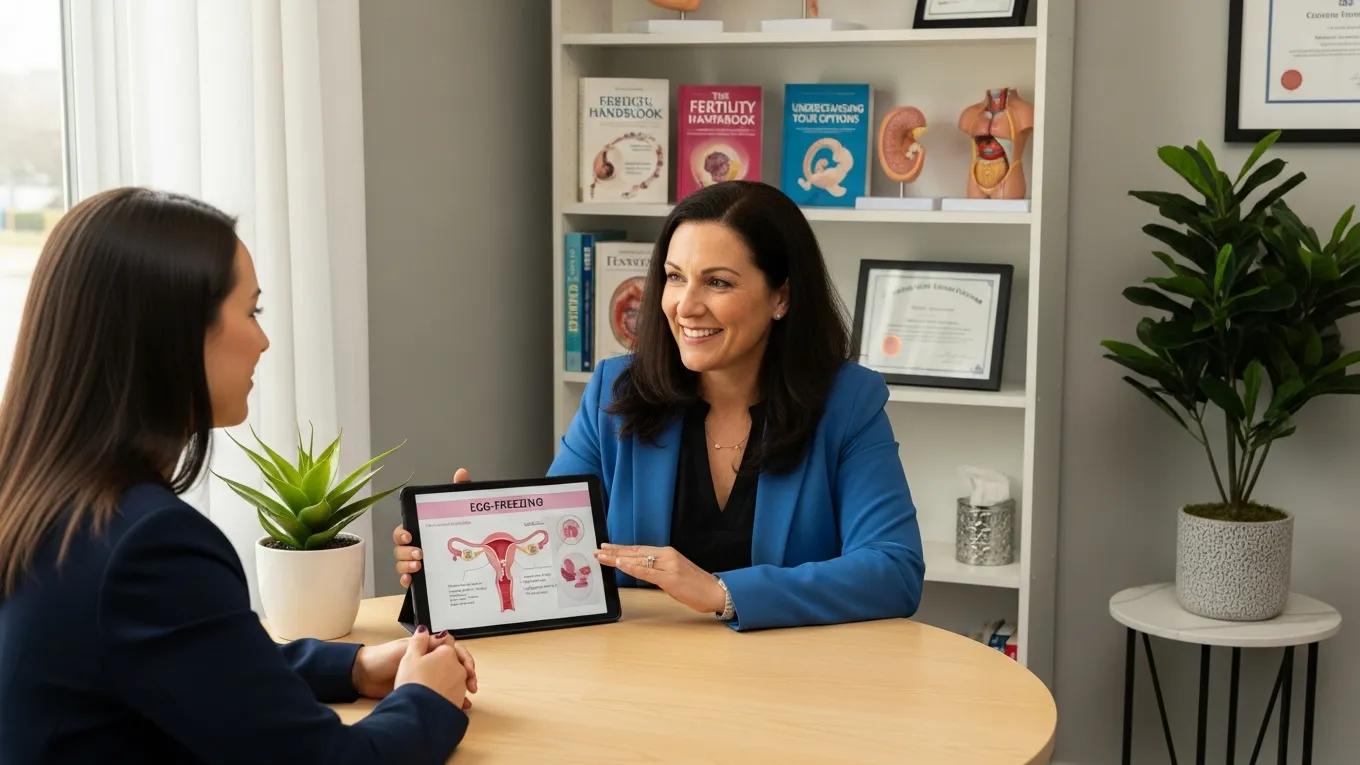
Long term egg storage may be helpful for some patients with endometriosis, especially when future pregnancy is important but not currently planned. It can give patients more time to manage symptoms, make treatment decisions, or plan for family-building later.
However, egg freezing is not a guarantee of pregnancy. It is one option within fertility planning, and the decision should be based on your age, ovarian reserve, endometriosis history, surgical plans, financial considerations, and personal goals.
Potential Benefits
For patients with endometriosis, long term egg storage may offer several possible benefits:
- Preserving eggs at your current age
- Creating more future fertility options
- Planning before ovarian surgery, when appropriate
- Supporting fertility planning if pregnancy is being delayed
- Giving more time to manage endometriosis symptoms before trying to conceive
- Helping patients feel more informed and prepared about future reproductive choices
Egg freezing may be especially worth discussing if you have ovarian endometriomas, reduced ovarian reserve, previous ovarian surgery, or planned surgery that may involve the ovaries.
Important Limitations
Long term egg storage has limits that should be clearly understood before starting the process. Not every egg collected will be mature enough to freeze. Not every frozen egg will survive thawing. Not every thawed egg will fertilize, become an embryo, implant, or lead to pregnancy.
Some patients may also need more than one egg freezing cycle to store a reasonable number of mature eggs. This can affect cost, time, medication exposure, and emotional stress.
Egg freezing also does not stop endometriosis from progressing or treat endometriosis symptoms. It is a fertility preservation option, not an endometriosis treatment.
Risks and Side Effects
The egg freezing process usually involves hormone injections, monitoring visits, and egg retrieval. Some patients may experience bloating, cramping, breast tenderness, mood changes, headaches, fatigue, or discomfort during stimulation. Egg retrieval is generally a short procedure, but it still carries risks, including bleeding, infection, discomfort, or, rarely, complications involving nearby organs. Ovarian hyperstimulation syndrome is also a possible but uncommon risk.
Patients with endometriosis should discuss whether stimulation may affect their symptoms and what to do if pain, bloating, or other concerns develop during the cycle.
Timing Egg Storage Around Endometriosis Treatment
Timing is one of the most important parts of fertility preservation planning for patients with endometriosis. Some patients may benefit from discussing egg freezing before surgery, before repeat ovarian procedures, or before delaying pregnancy for several years.
The right timing is different for each patient. Your care team may consider your age, ovarian reserve, symptoms, endometrioma size, prior surgeries, fertility goals, and whether treatment is urgent or can be planned in stages.
Before Endometrioma Surgery
If you have an ovarian endometrioma and surgery is being considered, your doctor may recommend discussing fertility preservation before the procedure. This is because surgery involving the ovary may affect ovarian reserve in some patients.
This does not mean every patient with an endometrioma needs egg freezing. The decision depends on your age, ovarian reserve, symptoms, cyst size, prior surgery history, and pregnancy goals.
Before Repeat Pelvic Surgery
Patients who have had previous ovarian or pelvic surgery may need a more careful fertility planning discussion before another procedure. Repeat surgery involving the ovaries may carry additional risk to ovarian reserve.
If future pregnancy matters to you, ask whether egg freezing should be considered before another surgery. Your endometriosis doctor and fertility specialist can help weigh the risks and benefits.
Before Delaying Pregnancy
Some patients with endometriosis are not ready to try for pregnancy but want to protect future options. In this situation, long term egg storage may be worth discussing, especially if ovarian reserve is low or endometriosis affects the ovaries.
Egg freezing may give more flexibility, but it should be considered alongside realistic success rates, cost, storage policies, and the possibility that you may still conceive naturally later.
When to Involve a Fertility Specialist
A fertility specialist, also called a reproductive endocrinologist, can help evaluate ovarian reserve, explain egg freezing success factors, and estimate how many eggs you may want to store based on your age and goals. For patients with endometriosis, involving a fertility specialist early can be especially useful when there are endometriomas, planned ovarian surgery, reduced ovarian reserve, difficulty conceiving, or uncertainty about when to start trying for pregnancy.
Frequently Asked Questions
Should Patients With Endometriosis Consider Egg Freezing?
Some patients with endometriosis may want to discuss egg freezing, especially if they have ovarian endometriomas, reduced ovarian reserve, previous ovarian surgery, planned ovarian surgery, or future pregnancy goals.
Egg freezing is not necessary for every patient with endometriosis. A consultation with an endometriosis specialist and fertility specialist can help you understand whether long term egg storage makes sense for your situation.
Can Endometriosis Lower Ovarian Reserve?
Endometriosis may be associated with lower ovarian reserve in some patients, especially when endometriomas affect the ovaries or when there has been previous ovarian surgery.
Ovarian reserve can be checked with tests such as AMH blood testing and ultrasound-based follicle counts. These tests do not tell the whole fertility story, but they can help guide fertility preservation planning.
Should I Freeze Eggs Before Endometriosis Surgery?
Some patients may be advised to discuss egg freezing before surgery, especially if the procedure may involve the ovaries or removal of endometriomas. Surgery can be helpful for pain or disease management, but ovarian surgery may affect ovarian reserve in some cases.
This decision depends on your age, ovarian reserve, symptoms, endometrioma size, prior surgery history, and pregnancy goals. Your doctor can help you weigh the benefits and limitations before surgery.
How Long Can Frozen Eggs Be Stored?
Frozen eggs can often be stored for many years when properly frozen and maintained in a monitored fertility lab. However, storage length may depend on clinic policies, consent renewal rules, storage fees, and local regulations.
Before freezing eggs, ask your fertility clinic how long storage is available, what paperwork must be renewed, and what happens if your plans change.
Does Long-Term Storage Damage Frozen Eggs?
When eggs are frozen and stored correctly, time in storage is not usually considered the main factor affecting future egg quality. The age and quality of the eggs at the time they are frozen are often more important.
That said, not every egg will survive thawing, fertilize, or develop into an embryo. Your fertility specialist can explain expected outcomes based on your age, ovarian reserve, and number of mature eggs stored.
Can I Still Get Pregnant Naturally After Freezing Eggs?
Yes. Freezing eggs does not stop you from trying to conceive naturally in the future. It stores eggs as a possible backup option for later IVF use.
Your natural fertility will still depend on factors such as age, ovarian reserve, endometriosis severity, fallopian tube health, sperm quality, and overall reproductive health.
Does Egg Freezing Guarantee Pregnancy Later?
No. Egg freezing does not guarantee pregnancy or a live birth. It may preserve more future options, but several steps must still happen later, including thawing, fertilization, embryo development, embryo transfer, and implantation.
This is why realistic counseling is important before starting the process. Your fertility specialist can help estimate what egg freezing may offer based on your individual situation.
Conclusion
Long term egg storage for fertility may be an important option for some patients with endometriosis, especially those with ovarian endometriomas, reduced ovarian reserve, previous ovarian surgery, planned ovarian surgery, or future family-building goals. By freezing eggs now, some patients may preserve more reproductive options for possible future IVF use.
Egg freezing is not a guarantee of pregnancy, and it is not necessary for every person with endometriosis. The decision should be based on your age, ovarian reserve, symptoms, imaging results, treatment history, surgical plans, and personal goals.
At Endometriosis Center of Excellence, Dr. Rachael Haverland can help patients understand how endometriosis may affect fertility and whether fertility preservation should be part of their care plan. If you are concerned about future pregnancy, ovarian reserve, or timing endometriosis treatment around fertility goals, a consultation can help clarify your next steps.