
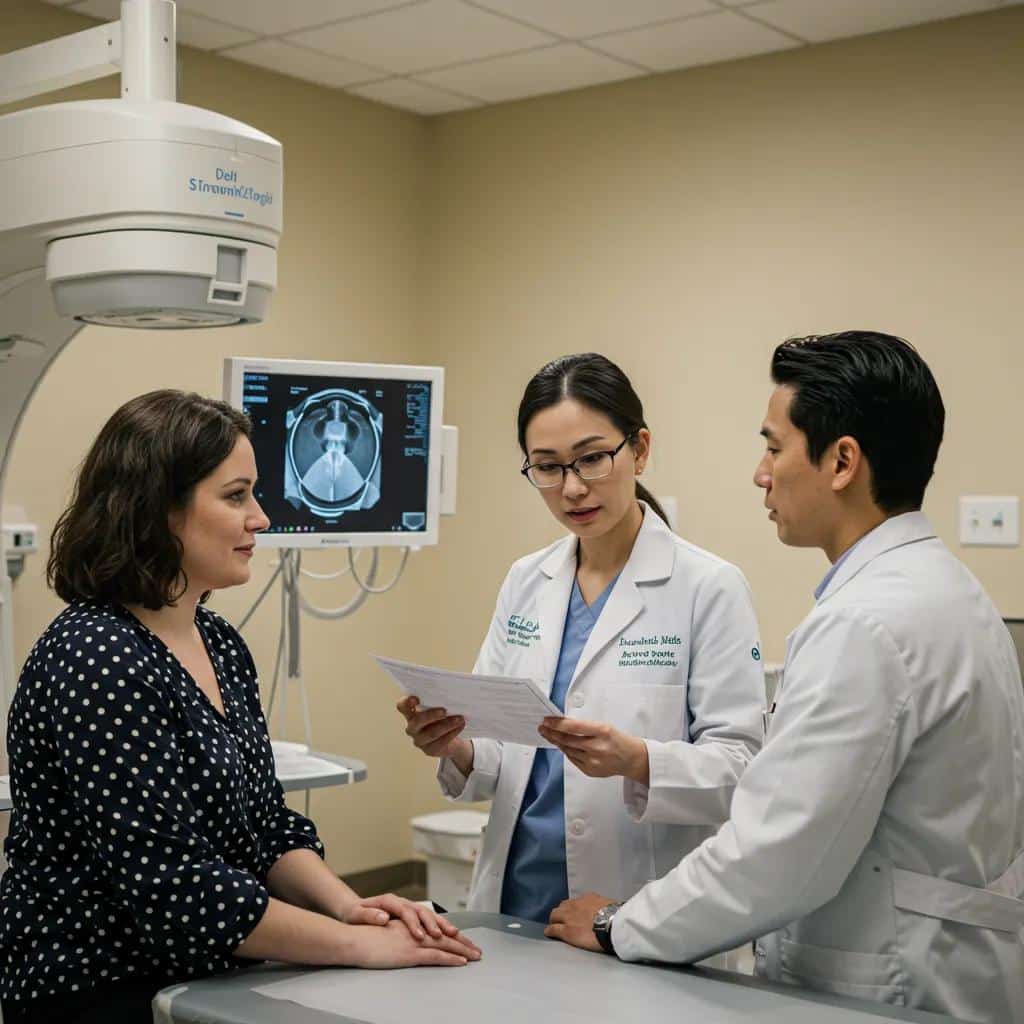
Endometriosis, a chronic condition where uterine-like tissue grows outside the uterus, can cause significant pain, adhesions, and fertility challenges. Imaging tests are vital tools that help our specialists visualize many, though not all, of these lesions, guiding us toward the most effective treatment strategies. This guide will walk you through how diagnostic imaging fits into your endometriosis journey, comparing transvaginal ultrasound (TVUS) and pelvic magnetic resonance imaging (MRI). You’ll learn how imaging findings influence decisions about medical therapies, fertility care, and surgical planning.
Why Early and Accurate Endometriosis Diagnosis Matters

Getting an early and accurate endometriosis diagnosis means less time spent suffering from symptoms, better chances for fertility preservation through timely intervention, and a reduced risk of the disease progressing to cause adhesions and organ dysfunction. Diagnostic imaging accelerates your path from recognizing symptoms to receiving a tailored care plan by non-invasively identifying ovarian endometriomas and many deep lesions. This helps our specialists guide you toward the right medical therapy, fertility referral, or surgical planning. Recent research and guidelines highlight the importance of reducing the average diagnostic delay and using imaging strategically to enhance your outcomes and overall experience.
Common Symptoms Prompting Endometriosis Imaging
Several symptoms commonly lead to a referral for pelvic imaging to investigate possible endometriosis, and recognizing these signs helps us initiate a prompt diagnostic workup. Pain patterns like severe menstrual cramps (dysmenorrhea), pain during intercourse (deep dyspareunia), and chronic pelvic pain can signal both superficial and deep lesions. Bowel or bladder symptoms—such as painful bowel movements, cyclical rectal bleeding, or urinary frequency or pain—suggest rectosigmoid or bladder involvement and warrant targeted imaging. Infertility or difficulty conceiving is another key indicator; ovarian endometriomas can impact ovarian reserve, prompting imaging focused on the adnexal structures.
How Diagnostic Delays Impact Endometriosis Treatment Outcomes
Delays in diagnosing endometriosis are linked to prolonged pain, progression to more extensive disease, and potential negative impacts on fertility and mental well-being, making timely assessment absolutely crucial. Studies consistently show multi-year average delays between symptom onset and a formal diagnosis, and these delays often correlate with increased adhesions and more complex surgical needs. Early imaging that identifies ovarian endometriomas or suspected DIE can shift your management sooner toward fertility preservation or definitive excision, significantly altering long-term outcomes. The emotional and financial toll—including missed work, repeated ineffective treatments, and psychological distress—also lessens when patients navigate the diagnostic pathway more efficiently. Recognizing symptoms early and pursuing directed imaging helps mitigate these downstream effects and supports shared decision-making about your next steps.
The Role of Clinical Examination Before Imaging Tests
A thorough clinical history and pelvic examination remain essential first steps that shape which imaging modality is chosen and how urgently tests are performed. Findings from your clinical exam—such as tender nodules in the uterosacral ligaments, a fixed retroverted uterus, or palpable adnexal masses—help prioritize transvaginal ultrasound for adnexal evaluation or MRI for comprehensive pelvic mapping. The exam also identifies red flags (e.g., severe obstructive urinary or bowel symptoms) that necessitate expedited imaging and potential multidisciplinary consultation. Combining your clinical assessment with your symptom patterns increases the likelihood of specific lesion types and enhances the interpretive value of subsequent imaging. A clear handoff from your exam to the imaging team ensures the study targets the most relevant pelvic compartments.
How Transvaginal Ultrasound Detects Endometriosis
Transvaginal ultrasound (TVUS) is a real-time pelvic imaging technique that uses high-frequency sound waves to visualize your ovaries, uterus, adnexa, and some pelvic ligaments. It can detect characteristic appearances like endometriomas and suggestive signs of deep infiltrating endometriosis (DIE), enabling focused clinical decision-making. TVUS works by placing a high-frequency probe inside the vagina, bringing pelvic structures closer to the transducer for increased resolution. This allows for dynamic maneuvers, such as the “sliding sign,” which reveals adhesions and organ mobility. Because TVUS is widely accessible, cost-effective, and can be performed at the bedside by an experienced sonographer, it’s often the first-line imaging choice for suspected ovarian endometriomas and many DIE lesions.
What TVUS Reveals About Endometriomas and Deep Infiltrating Endometriosis
TVUS typically shows ovarian endometriomas as unilocular or multilocular cysts with homogeneous, low-level echoes and often smooth walls. Deep infiltrating endometriosis (DIE) may appear as hypoechoic nodules, fixed masses, or obliteration of normal sliding between organs. Sonographic markers like the “ground-glass” appearance of cyst contents and internal septations are classic signs of endometrioma, while loss of the sliding sign, tethering of the ovary, or nodularity along the uterosacral ligaments suggest DIE. These findings directly translate to clinical implications: endometriomas raise concerns about fertility and ovarian reserve, and DIE findings inform the need for multidisciplinary surgical planning. To summarize typical ultrasound findings and their implications, the table below maps common sonographic appearances to clinical interpretation.
Because TVUS interpretation is operator-dependent, expert pelvic ultrasonography enhances detection and helps determine if additional imaging like MRI is warranted. Expert sonographers can perform compartmental assessments that directly inform surgical approach and multidisciplinary needs, leading naturally into a discussion of TVUS accuracy and patient preparation.
How Accurate Is TVUS for Diagnosing Different Types of Endometriosis?
TVUS demonstrates high accuracy for ovarian endometriomas, with sensitivity and specificity often exceeding 90% when performed by experienced professionals. However, its detection of DIE is more variable and strongly depends on sonographer expertise and standardized protocols. Studies indicate TVUS performs best for adnexal disease and certain DIE locations (e.g., rectovaginal septum) but is less reliable for superficial peritoneal lesions that are small or widely distributed. Operator expertise and the use of focused endometriosis protocols increase detection rates and reduce false negatives, leading to more reliable preoperative maps. Limitations can include reduced visualization in cases of obesity, extensive adhesions, or unusual lesion locations; in these scenarios, MRI may offer complementary information.
When and How Magnetic Resonance Imaging Is Used for Endometriosis Diagnosis

Pelvic MRI utilizes magnetic fields and specialized sequences to produce high-contrast images of soft tissues, making it particularly valuable for staging deep infiltrating endometriosis (DIE), mapping organ involvement, and assisting preoperative planning when TVUS findings are inconclusive or complex. MRI excels at delineating the extent of rectosigmoid, bladder, ureteral, and pelvic sidewall disease, and can visualize adhesions and anatomical distortions that influence surgical strategy. Indications for MRI include suspected multifocal DIE, complex adnexal masses, or when comprehensive pelvic mapping is required prior to multidisciplinary excision surgery. Because MRI sequences can be tailored to highlight blood products and fibrosis, MRI findings directly inform intraoperative expectations and help identify cases requiring colorectal or urology involvement.
What MRI Shows About Deep Infiltrating Endometriosis and Adhesions
MRI typically reveals DIE as hypointense fibrotic nodules on T2-weighted images, hyperintense foci on T1-weighted images when blood products are present, and tethering or organ distortion consistent with adhesions. These patterns clarify which pelvic organs are involved. For rectosigmoid disease, MRI shows bowel wall thickening, mural involvement, and the distance from the anal verge—critical information for colorectal planning. Bladder and ureteral involvement are identified by mural lesions, peri-ureteral fibrosis, or hydroureteronephrosis in advanced cases, guiding urology consultation. MRI’s multiplanar capability allows surgeons to plan incision placement, anticipate the need for segmental bowel resection, and coordinate multidisciplinary teams based on precise anatomic mapping.
MRI therefore provides a detailed anatomic map that adds significant value beyond TVUS when complex disease is suspected. Many specialized centers integrate MRI findings into preoperative planning to optimize excision outcomes. Advanced imaging interpretation informs expected intraoperative findings and referral needs, leading into considerations of MRI accuracy and preparation.
How Accurate Is MRI Compared to Other Imaging Tests for Endometriosis?
MRI offers high sensitivity and specificity for many forms of DIE—especially bowel and bladder involvement—with reported sensitivities often near or above 85–90% for certain lesion types in contemporary studies. However, its performance for superficial peritoneal disease remains limited. Comparative studies show MRI outperforms non-expert ultrasound for complex pelvic mapping but may be comparable to expert TVUS for some DIE locations, underscoring the importance of both technique and interpreter experience. MRI is most valuable when precise anatomic extent is required for operative planning. Its limitations include expense, availability, and contraindications in some patients. When both TVUS and MRI are used complementarily, clinicians achieve the most comprehensive preoperative assessment. We cover this further in Comprehensive Guide: Endometriosis Assessment Best Practices.
The diagnostic capabilities of both MRI and transvaginal ultrasound are heavily influenced by the experience of the operators and the imaging techniques employed.
How Patients Should Prepare for an Endometriosis MRI Scan
Proper preparation for pelvic MRI enhances diagnostic clarity and minimizes artifacts, improving the study’s utility for surgical mapping and staging. Typical preparation includes screening for metal implants, removing jewelry, and following instructions on fasting if contrast is planned. Some centers recommend mild bowel preparation or the administration of antispasmodic agents to reduce motion and improve visualization of bowel lesions. Patients with claustrophobia should discuss anxiolytic options with their provider, and those with contrast allergies or renal impairment require individualized planning regarding gadolinium use. Clear preparation guidance reduces the likelihood of repeat imaging and streamlines preoperative planning.
MRI preparation checklist:
- Metal screening: Disclose any implants, pacemakers, or metal fragments to the MRI staff.
- Bowel prep/antispasmodic: Follow your provider’s instructions if recommended to improve bowel visualization.
- Contrast considerations: Inform the team of any prior contrast reactions or kidney issues.
Careful preparation ensures MRI provides the high-quality anatomic detail surgeons rely on for operative decisions.
The Patient Experience During and After MRI for Endometriosis
MRI scans are typically longer than ultrasound—often 30–60 minutes—and patients may experience noise and a sense of enclosure. Staff support, headphones, and clear explanations help mitigate discomfort. Movement restriction is crucial for image quality, and centers often offer breaks or communication devices for patients to signal any issues. After the scan, radiologists produce a structured report detailing lesion locations, size, and relationships to organs. That report is then integrated with your clinical assessment to form a management plan. Timely reporting and clinician interpretation of MRI findings expedite decisions about medical therapy, fertility referral, or scheduling for excision surgery.
Key Differences Between Ultrasound and MRI for Endometriosis Imaging
TVUS and MRI are complementary diagnostic imaging modalities: TVUS is often the first-line choice for ovarian endometriomas and provides accessible dynamic assessment, while MRI offers comprehensive soft-tissue contrast for complex DIE and detailed preoperative mapping. Ultrasound’s strengths lie in its cost-effectiveness, real-time dynamic maneuvers, and excellent resolution for adnexal lesions when performed by experienced sonographers. MRI’s strengths include multiplanar anatomic detail, superior assessment of bowel and urinary tracts, and consistent reproducibility across operators. Tradeoffs involve accessibility and cost—TVUS is typically more available and less expensive, while MRI may have longer wait times.
How TVUS and MRI Compare in Detecting Superficial, Ovarian, and Deep Endometriosis
For ovarian endometriomas, both TVUS and MRI demonstrate high detection rates, but TVUS often offers a quicker and more cost-effective diagnosis in expert hands. For deep infiltrating endometriosis, MRI tends to better delineate its extent across compartments—especially the bowel and ureters—while expert TVUS can match MRI for many pelvic floor and rectovaginal lesions. Superficial peritoneal disease often eludes both modalities and thus may still require laparoscopy for definitive identification. Operator expertise and standardized imaging protocols narrow the accuracy gap between modalities and ultimately influence which test is chosen. You may also find Discover Early Signs of Endometriosis for Faster Diagnosis helpful.
While both ultrasound and MRI are valuable for diagnosing endometriosis, their effectiveness varies depending on the location and type of lesion, with MRI often providing more comprehensive mapping for deep infiltrating endometriosis.
How Imaging Accuracy Influences Surgical Planning
Accurate preoperative imaging transforms surgical approach by mapping lesion locations, estimating complexity, and identifying the need for multidisciplinary teams such as colorectal or urology surgeons. Imaging-guided maps reduce intraoperative surprises, shorten operative time, and enable planned resections or reconstructions rather than intraoperative triage. For example, identification of rectosigmoid involvement on MRI prompts colorectal involvement and informs consent about potential bowel resection, whereas isolated ovarian endometriomas identified on TVUS may lead to unilateral cystectomy planning. This imaging-to-surgery link underscores the value of precise reads and standardized reporting for operative safety and outcomes.
Why Expert Interpretation Is Critical for Both Imaging Modalities
Expert interpretation by sonographers and radiologists trained in endometriosis significantly increases diagnostic yield and ensures imaging findings translate into actionable surgical plans. Operator dependence affects TVUS sensitivity for DIE, while radiologist experience refines MRI lesion characterization and staging. Both specialties benefit from focused endometriosis protocols. Referral to centers specializing in endometriosis imaging reduces false negatives, clarifies multidisciplinary needs, and supports shared decision-making around excision surgery. Given these benefits, expert interpretation is a key determinant of imaging value and downstream patient outcomes.
Why Laparoscopy Remains the Gold Standard for Endometriosis Diagnosis
Laparoscopy remains the gold standard for diagnosing endometriosis because it allows direct visualization, biopsy, and immediate excision of lesions in a single procedure. This dual diagnostic and therapeutic capability provides definitive confirmation through histology and symptom relief through targeted removal. While imaging plays a crucial preoperative role in mapping disease, small or superficial peritoneal implants can still evade detection and are best identified during laparoscopy. The integration of preoperative imaging with laparoscopic confirmation ensures accurate diagnosis, thorough excision, and improved long-term outcomes. You may also find Discover Key Markers for Endometriosis Diagnosis Today helpful.
How Imaging Guides Laparoscopic Surgery for Endometriosis
Preoperative imaging creates a detailed lesion map that helps surgeons plan trocar placement, dissection planes, and the involvement of multidisciplinary specialists when bowel, bladder, or ureteral structures are affected. Accurate mapping reduces intraoperative surprises, shortens operative time, and supports informed preoperative counseling about potential findings or staged procedures. Imaging-guided surgical planning enhances both safety and completeness of excision.
When Laparoscopy Is Necessary Despite Imaging Results
Laparoscopy becomes essential when imaging is inconclusive but symptoms persist, when superficial peritoneal disease is suspected despite negative imaging, or when infertility evaluation requires direct pelvic assessment. It is also indicated for patients with progressive pain, organ dysfunction, or discordance between clinical severity and imaging findings. In these cases, laparoscopy enables definitive diagnosis and treatment, addressing lesions not visible on imaging. Read more in Discover Your Symptoms: Endometriosis Diagnosis Made Easy.
Benefits of Combining Imaging with Surgical Diagnosis
Integrating imaging with laparoscopy leads to more efficient, safer, and comprehensive care. Preoperative imaging clarifies disease extent, allowing for precise surgical planning, multidisciplinary coordination, and realistic patient counseling. Evidence shows that combining imaging with laparoscopy reduces operative time, minimizes unexpected findings, and improves excision completeness—ultimately optimizing outcomes and recovery for patients with endometriosis.
Next Steps After Imaging Tests for Endometriosis Diagnosis
After imaging is completed, clinicians integrate the findings with your medical history and physical examination to create a comprehensive assessment.. This synthesis determines the most appropriate management pathway—whether that involves medical therapy, active monitoring, fertility planning, or surgical excision. Imaging reports are interpreted in clear, patient-friendly terms, highlighting lesion location, depth, and clinical relevance to support shared decision-making.
When imaging reveals complex deep infiltrating endometriosis (DIE) or potential organ involvement, referral to a multidisciplinary specialist center for further evaluation and minimally invasive excision surgery may be recommended. Structured follow-up and coordinated scheduling ensure a smooth transition from imaging results to definitive care.
How Imaging Results Are Interpreted and Communicated
Imaging reports typically include lesion descriptions, size, and anatomical relationships, which clinicians interpret in the context of your symptoms, fertility goals, and prior treatments. Best practice involves a timely discussion—either in person or via telehealth—to explain the findings, answer questions, and outline next steps such as conservative therapy, additional imaging, or specialist referral. Providing patients with written summaries and copies of imaging reports supports informed choices and facilitates multidisciplinary consultations when needed.
Treatment Options Following Imaging-Based Diagnosis
Post-imaging management depends on disease extent, symptom severity, and individual priorities.
- Medical management: Hormonal suppression or pain-control therapies can stabilize symptoms and slow lesion progression.
- Fertility-focused care: Referral to a reproductive endocrinologist is advised when ovarian reserve or tubal factors may be affected.
- Surgical excision: Minimally invasive excision is recommended for confirmed endometriomas or DIE to restore anatomy and relieve pain.
The choice of treatment is guided by imaging findings, clinical presentation, and patient goals, ensuring that care is both targeted and individualized.
Conclusion
Advanced imaging techniques such as transvaginal ultrasound and pelvic MRI are central to accurate diagnosis and comprehensive management of endometriosis. When interpreted by experienced clinicians, these tools guide timely intervention, inform fertility planning, and improve surgical precision. Understanding how imaging shapes each step of the diagnostic and treatment process empowers patients to make confident, informed decisions and pursue effective, evidence-based care. If you have questions about your own symptoms, you can schedule an appointment with our endometriosis specialists.