Endometriosis surgery may support fertility planning for selected patients, but it is not the right first step for everyone. Surgery can be helpful when endometriosis is affecting pelvic anatomy, the ovaries, fallopian tubes, adhesions, endometriomas, or pain with intercourse. However, surgery does not guarantee pregnancy, and the decision should be individualized.
Fertility planning with endometriosis depends on many factors, including age, ovarian reserve, disease location, endometrioma involvement, fallopian tube function, prior surgery, partner fertility factors, pain severity, and pregnancy timeline. A patient with surgically treatable adhesions may need a different plan from a patient with low ovarian reserve and urgent fertility timing.
At Endometriosis Center of Excellence, fertility concerns are approached through personalized endometriosis evaluation, laparoscopic excision surgery when appropriate, fertility-conscious surgical planning, and coordination with fertility specialists when reproductive treatment or fertility preservation options should be discussed.
Can Endometriosis Surgery Help With Fertility?
Yes, endometriosis surgery may help with fertility in selected patients. The key phrase is “selected patients.” Surgery is most relevant when there is a surgically addressable barrier, such as adhesions, distorted pelvic anatomy, ovarian endometriomas, suspected deep endometriosis, or pain that interferes with intercourse.
For some patients, laparoscopic excision surgery may help by removing visible endometriosis lesions, releasing adhesions, improving anatomy where possible, and addressing endometriomas when clinically appropriate. For others, the better first step may be ovarian reserve testing, reproductive endocrinology evaluation, fertility preservation consultation, or fertility treatment.
Surgery should not be recommended only because a patient has endometriosis. The decision should be based on whether surgery is likely to add value for that patient’s symptoms, anatomy, ovarian reserve, and reproductive goals.
What Surgery Can Potentially Improve
Endometriosis surgery may support fertility planning by addressing factors that can interfere with conception or fertility treatment access. Depending on the patient’s disease pattern, surgery may help with:
- Adhesions that restrict ovarian or fallopian tube movement
- Distorted pelvic anatomy
- Endometriomas that cause pain, grow, or interfere with access to the ovaries
- Visible endometriosis lesions contributing to inflammation or pain
- Pain with intercourse when visible disease is part of the cause
- Diagnostic clarity through direct visualization and pathology when appropriate
- Planning for next fertility steps after disease extent is better understood
These potential benefits should be discussed in context. Surgery is one part of a broader fertility plan, not a standalone guarantee.
What Surgery Cannot Guarantee
Endometriosis surgery cannot guarantee pregnancy. It also cannot guarantee live birth, normal ovarian reserve, open fallopian tubes in every case, no recurrence, or success with IVF or IUI.
Fertility depends on multiple variables, including age, egg supply, egg quality, sperm factors, tubal function, uterine factors, ovulation, prior treatment history, and timing. Surgery may address visible disease and anatomy, but it does not control every factor involved in conception.
This is why fertility-conscious surgery should be paired with realistic counseling and, when appropriate, reproductive endocrinology coordination.
When Surgery May Be Considered for Fertility Planning
Surgery may be considered when endometriosis is likely to be affecting fertility through a problem that surgery can reasonably address. The goal is not simply to operate; the goal is to choose the treatment sequence that best supports the patient’s symptoms and reproductive timeline.
Endometriomas
Endometriomas are ovarian cysts associated with endometriosis. Because they involve the ovaries, they require careful fertility-focused discussion.
Surgery may be considered when endometriomas:
- Cause significant pain
- Grow over time
- Have concerning imaging features
- Distort pelvic anatomy
- Interfere with access to follicles during fertility treatment
- Are part of a broader pattern of symptomatic endometriosis
However, surgery involving the ovaries must be planned carefully. Healthy ovarian tissue should be protected whenever possible, especially for patients who want future pregnancy. Patients with endometriomas may need ovarian reserve testing and fertility specialist input before surgery.
Not every endometrioma needs to be removed immediately. The decision should consider symptoms, size, ovarian reserve, age, prior ovarian surgery, fertility plans, and whether fertility treatment is being considered.
Adhesions or Distorted Pelvic Anatomy
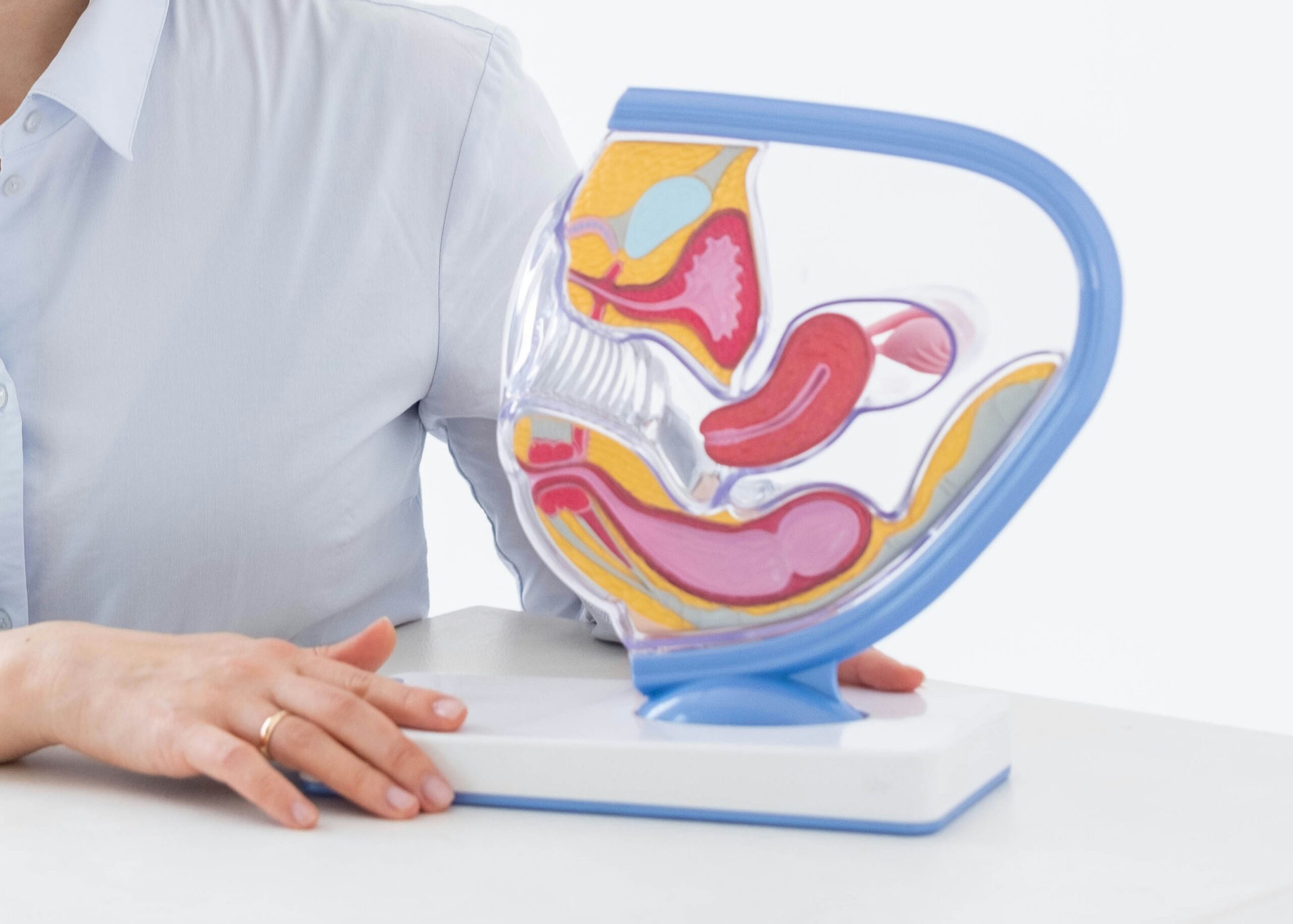
Endometriosis can cause adhesions, which are bands of scar tissue that tether pelvic organs. Adhesions may involve the ovaries, fallopian tubes, uterus, bowel, bladder, or pelvic sidewall.
When adhesions restrict organ mobility, they may interfere with natural conception by affecting egg pickup or fallopian tube movement. Surgery may release adhesions and improve anatomy where possible.
This does not mean anatomy can always be fully restored. In complex or recurrent disease, the goal may be to improve function, reduce disease burden, and clarify the next step rather than promise a normal pelvis.
Suspected Deep Endometriosis
Deep endometriosis may involve the pelvic sidewall, bowel, bladder, ureters, or other nearby structures. When deep disease is suspected, fertility planning may require advanced imaging and careful surgical planning.
Patients with bowel symptoms, bladder symptoms, severe pain, or prior complex surgery may need a multidisciplinary approach. Colorectal or urology support may be appropriate when disease may involve the bowel, bladder, ureters, or deep pelvic tissues.
For these patients, surgery is not just a fertility decision. It is also a safety, anatomy, pain, and long-term disease-management decision.
Pain That Interferes With Intercourse
Endometriosis can cause pain with sex, especially when deep disease, adhesions, inflammation, or pelvic floor muscle guarding are present. Pain during intercourse may make timed intercourse difficult, which can indirectly affect natural conception attempts.
Surgery may help when visible disease contributes to pain. However, pain with intercourse may also involve pelvic floor dysfunction or nerve sensitization. Some patients may still need pelvic floor physical therapy or other supportive care after surgery.
The fertility plan should consider both reproductive anatomy and the patient’s ability to participate comfortably in conception attempts.
Prior Failed Fertility Treatment With Suspected Active Endometriosis
Some patients seek endometriosis evaluation after unsuccessful IUI or IVF cycles. Surgery is not always the next step after failed fertility treatment, but it may be considered when there is concern for untreated endometriosis, endometriomas, adhesions, distorted anatomy, or persistent pain.
In this situation, coordination between the endometriosis specialist and reproductive endocrinologist is especially important. The goal is to determine whether surgery is likely to improve the next phase of fertility planning or whether proceeding with fertility treatment is more appropriate.
When Surgery May Not Be the First Step

Surgery can be valuable, but it is not always the most efficient or safest first step. In some cases, fertility specialist evaluation should happen before surgery.
Low Ovarian Reserve
Patients with low ovarian reserve may need reproductive endocrinology evaluation before surgery, especially if surgery may involve the ovaries.
Ovarian reserve is commonly assessed with tests such as AMH and antral follicle count. These tests do not predict pregnancy with certainty, but they help guide timing and treatment sequencing.
If ovarian reserve is already low, surgery involving endometriomas may carry additional concern because ovarian surgery can affect healthy ovarian tissue in some cases. Fertility preservation or IVF timing may need to be discussed before surgical intervention.
Age-Related Fertility Timing
Age is one of the most important fertility factors. If pregnancy timing is urgent, delaying fertility treatment for surgery may not always be the best first step.
A reproductive endocrinologist can help assess whether IVF, IUI, egg freezing, or embryo freezing should be discussed before surgery. This does not mean surgery is unnecessary. It means treatment sequencing should reflect the patient’s reproductive timeline. Read more in Assess Your Endometriosis: When to Consider Advanced Surgery.
For some patients, fertility treatment may come first. For others, surgery may be needed before fertility treatment because pain, anatomy, or endometriomas are creating barriers. The decision should be individualized.
Minimal Symptoms and No Clear Surgical Target
If a patient has minimal symptoms, no endometriomas, no suspected adhesions, no deep disease, and no clear surgical target, surgery may not be the most efficient first fertility step.
In these cases, fertility testing may be more useful initially. Evaluation may include ovarian reserve testing, ovulation assessment, tubal evaluation when appropriate, and semen analysis for the partner when relevant.
Surgery should add value. If the likely benefit is unclear, a careful diagnostic and fertility evaluation may help prevent unnecessary delay or unnecessary intervention.
Partner or Non-Endometriosis Fertility Factors
Not all fertility challenges are caused by endometriosis. Male factor infertility, ovulation disorders, uterine factors, genetic factors, or other medical conditions may affect pregnancy chances.
Surgery will not correct these issues. If non-endometriosis fertility factors are present, the care plan should include appropriate fertility testing and reproductive endocrinology guidance.
A complete fertility evaluation helps prevent focusing only on endometriosis when other factors may be equally or more important.
Why Laparoscopic Excision Is the Preferred Surgical Approach When Surgery Is Appropriate

When surgery is appropriate, laparoscopic excision is often preferred because it removes identified endometriosis lesions from tissue rather than only treating the surface. For patients with fertility goals, the surgical plan should also prioritize preservation of reproductive structures whenever possible.
Excision vs. Ablation
Excision and ablation are different surgical techniques.
Excision removes identified endometriosis lesions from tissue. Ablation treats the surface of lesions, often by burning or destroying visible tissue. Excision may be preferred when the goal is thorough treatment of visible disease and pathology confirmation when appropriate.
This does not mean excision guarantees fertility improvement or prevents recurrence. It means excision is often the more complete surgical approach when visible disease needs to be removed and tissue diagnosis is useful.
Treating Visible Disease While Preserving Healthy Tissue
Fertility-conscious surgery requires careful work near the ovaries, fallopian tubes, bowel, bladder, ureters, pelvic nerves, and blood vessels. The goal is to remove visible disease while preserving healthy anatomy and reproductive structures whenever possible.
This balance is especially important in patients with:
- Endometriomas
- Prior ovarian surgery
- Low ovarian reserve
- Deep disease near pelvic organs
- Adhesions involving reproductive structures
- Future pregnancy goals
Surgical expertise matters because endometriosis can be subtle, deep, scarred, or located near delicate structures. In complex cases, multidisciplinary planning may be needed.
Why Ovarian-Sparing Technique Matters
Endometrioma surgery must balance cyst treatment with protection of healthy ovarian tissue. Removing or treating an endometrioma may help selected patients, but ovarian surgery can affect ovarian reserve in some cases. You may also find Is Excision Surgery the Best Choice for Young Patients helpful.
Careful technique may reduce unnecessary ovarian injury. Preoperative ovarian reserve testing can also help guide counseling and determine whether fertility specialist input should happen before surgery.
Patients should ask how the surgical plan accounts for ovarian reserve, prior surgeries, and future fertility goals.
How Surgery May Support Natural Conception

Surgery may support natural conception when it addresses mechanical or pain-related barriers. Natural conception depends on ovulation, fallopian tube function, sperm factors, timing, age, ovarian reserve, and a pelvic environment that allows the reproductive organs to work together.
Releasing Adhesions
Adhesions may affect egg pickup and fallopian tube movement. If the ovary and fallopian tube cannot move normally, natural conception may become more difficult.
Adhesiolysis, or surgical release of adhesions, may improve anatomy where possible. This may help selected patients, especially when adhesions are clearly affecting reproductive structures.
Improving Ovarian and Tubal Access
Surgery may improve access to the ovaries or fallopian tubes when anatomy is distorted by adhesions, endometriomas, or deep disease.
This may matter for natural conception, but it can also matter for fertility treatment planning. For example, endometriomas or adhesions may make it more difficult for a fertility specialist to access the ovaries during egg retrieval. In some cases, surgery may be discussed as part of a coordinated plan.
Reducing Pain That Affects Timed Intercourse
Pain with intercourse can interfere with timed conception attempts. If visible endometriosis contributes to that pain, excision surgery may help selected patients.
However, pain may have multiple contributors. Pelvic floor muscle guarding, nerve sensitization, bladder pain, bowel conditions, and other overlapping issues may also need attention. Surgery may be one part of the plan rather than the entire solution.
How Surgery and Fertility Treatment May Work Together
Endometriosis surgery and fertility treatment are not always competing options. For some patients, they work together. The main decision is sequencing: what should happen first, and why?
Surgery Before Fertility Treatment
Surgery may be considered before fertility treatment when pain is significant, pelvic anatomy is distorted, endometriomas interfere with access to the ovaries, or deep disease needs treatment.
Surgery may also clarify the extent of disease before fertility planning. In some patients, treating visible disease and improving anatomy where possible may support natural conception attempts or make fertility treatment planning clearer.
Fertility Treatment Before Surgery
Fertility treatment or fertility preservation consultation may come before surgery when ovarian reserve is low, age-related timing is urgent, or surgery involving the ovaries could reduce egg quantity.
For some patients, egg freezing or embryo freezing may be discussed before ovarian surgery. This decision should be made with a reproductive endocrinologist or fertility clinic.
Coordinating With a Reproductive Endocrinologist
A reproductive endocrinologist evaluates ovarian reserve, ovulation, sperm factors, fallopian tube function, IUI, IVF, egg freezing, and embryo freezing.
Endometriosis Center of Excellence focuses on endometriosis evaluation, excision surgery when appropriate, medical management, fertility-conscious surgical planning, and coordination with fertility specialists.
IVF, IUI, egg freezing, embryo freezing, ovarian stimulation, egg retrieval, embryo transfer, and cryostorage are typically performed by reproductive endocrinologists or fertility clinics.
What Outcomes Should Patients Realistically Expect?
The most accurate answer is individualized. Outcomes vary by age, ovarian reserve, disease severity, tubal function, prior surgery, partner fertility factors, and treatment sequence.
Surgery may improve anatomy, reduce visible disease burden, support pain relief, and help coordinate next fertility steps. It should be framed as a potential part of fertility planning, not a guaranteed fertility solution.
Why Pregnancy-Rate Claims Can Be Misleading
Broad pregnancy-rate claims can be misleading because studies include different patient ages, disease stages, surgical techniques, fertility histories, and follow-up periods. Results from one group may not apply to another patient.
Specialist-center outcomes may also reflect carefully selected patients, advanced surgical expertise, and coordinated care models. Individual prognosis requires patient-specific evaluation.
Instead of focusing only on percentages, patients should ask what surgery is expected to address in their specific case.
What Follow-Up Should Clarify
Follow-up after surgery should clarify the next fertility-planning step. Depending on the patient, follow-up may address:
- When to try naturally
- When to return to a fertility specialist
- Whether ovarian reserve should be rechecked
- Whether IUI, IVF, egg freezing, or embryo freezing should be discussed
- Whether pain, bowel, bladder, or pelvic floor symptoms need additional care
- What symptoms should be monitored over time
A clear follow-up plan helps prevent avoidable delays.
Risks and Fertility-Specific Considerations of Surgery
Surgery can be helpful, but it also carries risks. Patients should understand both the possible benefits and the fertility-specific considerations before deciding.
General Surgical Risks
General risks of surgery may include bleeding, infection, anesthesia-related risks, injury to nearby organs, adhesion formation, and the need for additional procedures in complex disease.
The specific risk profile depends on disease location, surgical complexity, prior surgeries, and whether bowel, bladder, ureter, ovarian, or deep pelvic involvement is suspected.
Ovarian Reserve Considerations
Surgery involving the ovaries may affect ovarian reserve in some patients. This is especially important when endometriomas are present, when both ovaries are involved, or when prior ovarian surgery has already occurred.
Fertility preservation consultation may be appropriate before ovarian surgery, particularly for patients with low ovarian reserve, delayed pregnancy goals, or concern about age-related fertility decline.
Why Expertise and Planning Matter
Complex disease near the bowel, bladder, ureters, ovaries, or pelvic nerves requires advanced planning. Multidisciplinary support may be needed to help protect surrounding structures and support a safer surgical plan.
Fertility-conscious surgery is not only about removing disease. It is also about planning the right sequence, protecting reproductive structures when possible, and coordinating with fertility specialists when needed. For more detail, see our article Protecting Your Fertility: What to Ask Your Surgeon Before Complex Endo Surgery.
Frequently Asked Questions
Can surgery improve fertility in endometriosis patients?
Surgery may support fertility planning in selected patients by treating visible endometriosis, releasing adhesions, improving anatomy where possible, and addressing endometriomas when clinically appropriate. It does not guarantee pregnancy.
Who is most likely to benefit from endometriosis surgery for fertility planning?
Patients may be more likely to benefit when there is a surgically addressable issue, such as endometriomas, adhesions, distorted anatomy, suspected deep endometriosis, or pain with intercourse that affects timed conception attempts.
Can endometrioma surgery affect ovarian reserve?
Yes, surgery involving the ovaries can affect ovarian reserve in some patients. This is why endometrioma surgery should be planned carefully, especially for patients with low ovarian reserve, prior ovarian surgery, bilateral endometriomas, or future pregnancy goals.
Should I freeze eggs before endometriosis surgery?
Egg freezing may be worth discussing with a reproductive endocrinologist before ovarian surgery if ovarian reserve is low, endometriomas are present, pregnancy is being delayed, or surgery may involve the ovaries. Not every patient needs egg freezing, but early discussion can help clarify options.
Is excision better than ablation when fertility is a goal?
Excision removes identified endometriosis lesions from tissue, while ablation treats the surface of lesions. Excision may be preferred when the goal is thorough treatment of visible disease and pathology confirmation when appropriate. The best approach depends on disease location, symptoms, fertility goals, and surgical judgment.
How long should I try to conceive after surgery?
The timeline should be individualized. Age, ovarian reserve, tubal function, partner factors, surgical findings, and prior fertility history all matter. Some patients may try naturally after healing, while others may need earlier reproductive endocrinology follow-up.
Conclusion
If you have endometriosis and are wondering whether surgery could support your fertility plan, a specialist evaluation can help clarify the next step.
Endometriosis Center of Excellence provides personalized endometriosis care, including evaluation, laparoscopic excision surgery when appropriate, medical management, fertility-conscious surgical planning, and coordination with fertility specialists when reproductive treatment or fertility preservation options should be discussed.
Schedule a consultation to review your symptoms, imaging, ovarian reserve concerns, endometriomas, prior treatment history, and goals for current or future pregnancy.