
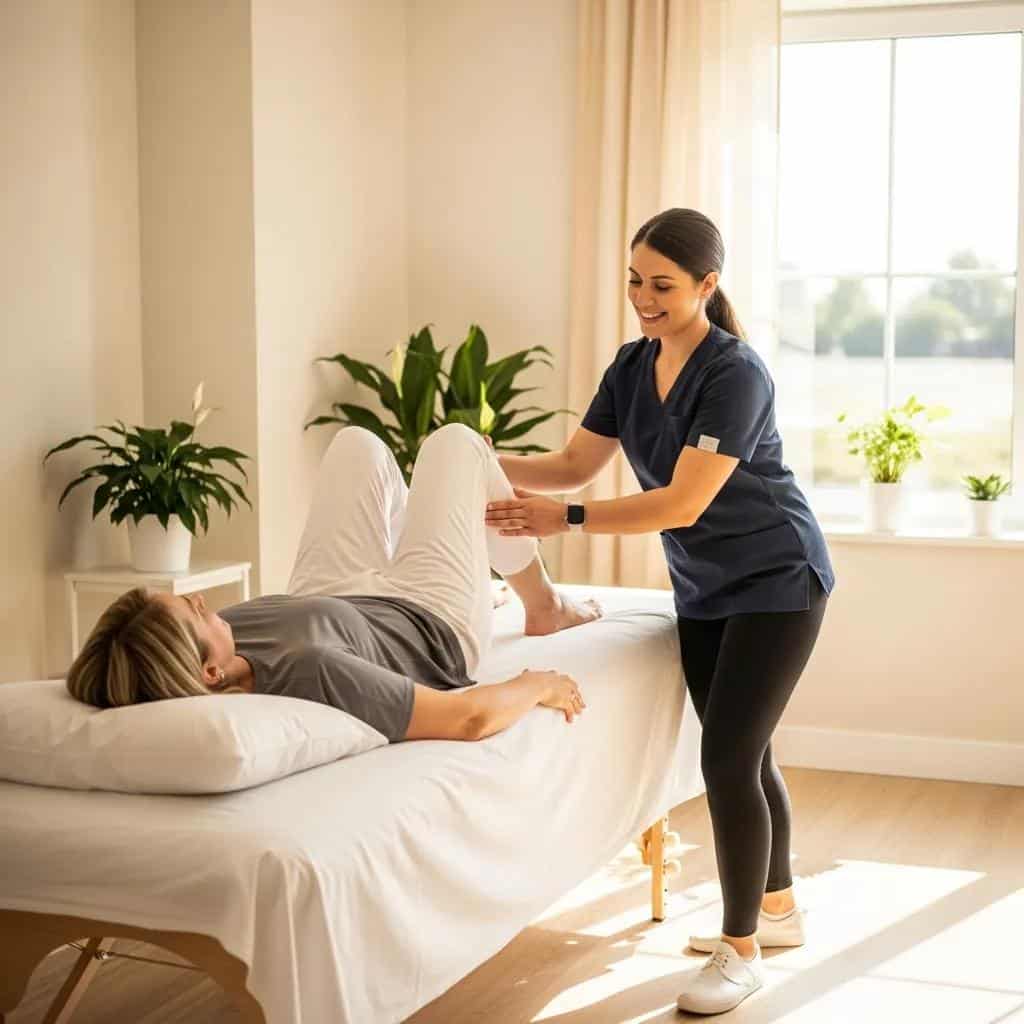
Physical therapy is an evidence‑informed option for people with endometriosis and chronic pelvic pain. Targeted pelvic‑floor work, manual techniques and graded movement restore coordination, ease myofascial pain and reduce protective muscle guarding. Below we explain pain drivers, how PT helps, common techniques, and what to expect from treatment. For more detail, see our article How Pelvic Physical Therapy Supports Endometriosis Pain Relief.
Clinical reviews support combined, non‑medical strategies, including PT, manual therapy, movement and psychological care, to lower pain and improve quality of life.
Holistic physical and manual therapy for endometriosis pain relief
Systematic searches find that comprehensive treatment plans often include pelvic‑floor physical therapy, manual techniques, electrophysical modalities, acupuncture, dietary adjustments and psychological interventions. Across studies, non‑medical approaches reduced symptoms and perceived stress while improving quality‑of‑life measures, with few reported adverse effects.
Holistic approaches in endometriosis, as an effective method of supporting traditional treatment: a systematic search and narrative review, S Tim, 2024
What Causes Endometriosis Pain And Pelvic‑Floor Dysfunction?

Pain usually begins with ectopic, endometrial‑like lesions that provoke local inflammation, scarring and adhesions. Those changes sensitize tissues and can alter how nearby muscles behave. Repeated guarding and protective postures often produce pelvic‑floor dysfunction, spasm, poor coordination, urinary symptoms or pain with intercourse, that perpetuates discomfort unless addressed.
How Does Endometriosis Produce Pelvic Pain And Muscle Tension?
Lesions and adhesions sensitize local tissues and the nervous system. Repeated guarding and protective postures create muscle tension and trigger points. Stress and anxiety can amplify pain through sympathetic arousal, so relaxation, breathing and gentle movement often reduce both pain and secondary muscle tightness.
What Pelvic‑Floor Problems Commonly Occur With Endometriosis?
Common dysfunctions include pelvic‑floor hypertonicity (spasm), myofascial trigger points, urinary urgency or frequency, pelvic pain and dyspareunia. These problems frequently limit daily activities and are primary targets for pelvic‑floor assessment and therapy.
What Are The Benefits Of Physical Therapy For Endometriosis Pain?

Physical therapy can provide several practical benefits: We cover this further in How Physical Therapy Helps Alleviate Endometriosis Pain.
- Pain reduction: Gentle movement and manual techniques improve circulation and relax tense muscles.
- Restored coordination: Pelvic‑floor retraining improves timing and reduces myofascial contributors to pain.
- Improved function: Low‑impact conditioning supports pelvic stability without overstressing tissues.
- Lowered stress response: Relaxation and mind‑body tools reduce sympathetic arousal that magnifies pain.
- Integrated care: PT combined with other therapies often yields larger quality‑of‑life gains than single treatments.
Overall, PT offers a non‑invasive route to reduce symptoms, improve function and better tolerate other treatments.
This table summarizes common outcomes clinicians and patients aim for when using PT to manage endometriosis‑related pain.
How Does Physical Therapy Reduce Pain And Improve Pelvic Function?
Therapists use assessment‑driven interventions, manual release, neuromuscular retraining, graded activity and relaxation, to interrupt guarding and central sensitization. Pre‑ and post‑operative PT may reduce perioperative anxiety and limit compensatory patterns. Combined with psychological and nutritional strategies, PT lowers baseline pain and improves function over weeks to months.
Can Physical Therapy Help Bowel, Bladder And Sexual Function?
Yes. Normalizing pelvic‑floor behavior and treating myofascial restrictions can reduce urinary and bowel symptoms and lessen sexual pain. Early postoperative pelvic‑floor rehab often prevents maladaptive guarding and supports smoother recovery.
Which Physical Therapy Techniques Are Used To Treat Endometriosis Pain?

Common approaches include:
- Pelvic‑floor physical therapy: Assessment and retraining to restore coordination.
- Gentle exercise programs: Walking, Pilates, stretching and other low‑impact activities.
- Acupuncture and electrophysical modalities: Adjuncts to modulate pain signaling in some patients.
- Mind‑body practices: Mindfulness, breathing exercises and yoga to lower stress sensitivity.
Therapists mix these tools based on each person’s primary drivers, myofascial pain, central sensitization or inflammation, to maximize benefit.
This summary outlines the common tools therapists use to address endometriosis‑related pain and dysfunction.
What Is Pelvic‑Floor Physical Therapy And How Does It Help?
Pelvic‑floor PT evaluates muscle tone, trigger points and coordination. Interventions can include internal and external manual work, neuromuscular re‑education and home exercises to rebalance muscles and reduce myofascial pain. PFPT is often paired with mind‑body care and other non‑medical options for longer‑term recovery.
High‑quality reviews emphasize pelvic‑floor PT and mindfulness as important components of chronic pelvic pain care, reflecting the complexity and broad impact of CPP.
Pelvic‑floor PT for chronic pelvic pain and myofascial disorders
Chronic pelvic pain (CPP) is a multifactorial syndrome linked to sexual dysfunction, musculoskeletal and myofascial problems, and mental‑health comorbidities. Systematic reviews and meta‑analyses evaluating mindfulness and pelvic‑floor physical therapy show these approaches can be valuable components of CPP management and warrant inclusion in multidisciplinary care plans.
Pelvic floor physical therapy and mindfulness: approaches for chronic pelvic pain in women, a systematic review and meta‑analysis, 2023
How Do Manual Therapies Such As Myofascial Release And Visceral Manipulation Work?
Manual therapies aim to release localized muscle tension, improve tissue mobility and correct abnormal movement patterns. Treating trigger points and fascial restrictions reduces nociceptive input and helps the nervous system process pain more normally. These methods work best when paired with active retraining and stress‑reduction techniques. Read more in How Endometriosis Physical Therapy Techniques Alleviate Pain.
Evidence supports evaluating and treating myofascial dysfunction when pain persists despite hormonal or surgical management. You may also find Endometriosis Pain Management With Physical Therapy helpful.
Physical therapy for endometriosis‑related myofascial pain
Many patients with endometriosis continue to experience pelvic pain after hormonal or surgical treatment because of central sensitization and myofascial trigger points. Reviews of treatments that directly target myofascial pain, such as physical therapy, dry needling, local anesthetic injections and botulinum toxin, highlight options for addressing these persistent pain generators.
Relating chronic pelvic pain and endometriosis to signs of sensitization and myofascial pain and dysfunction, KJ Heyrana, 2017
What Should Patients Expect During Physical Therapy For Endometriosis?

Treatment is individualized. Expect an intake that reviews medical history, pain patterns and goals, followed by a focused exam of pelvic‑floor muscle behavior and palpation for trigger points. Therapists then create a tailored plan that may include hands‑on work, guided exercise, breathing and pacing education. Hydration, sensible progression and clear communication about pain are emphasized.
How Is A Personalized Physical Therapy Plan Developed?
Plans start with a focused assessment of symptoms, movement and exam findings. Therapists prioritize key pain drivers, myofascial dysfunction, guarding, central sensitization or deconditioning, and select interventions with realistic, measurable goals.
What Is The Typical Duration And Frequency Of Therapy Sessions?
Frequency is individualized; many patients begin once or twice weekly and progress over weeks to months. When psychological therapies are included, improvements in mood and coping often emerge within several sessions and support broader rehabilitation.
Frequently Asked Questions
What role does nutrition play in managing endometriosis symptoms?
Nutrition can help reduce inflammation and support overall health. Diets focused on whole foods, fruits, vegetables and omega‑3s may lower inflammatory markers; supplements such as omega‑3s or magnesium are sometimes used under supervision. Coordinate any changes with your care team.
How can mindfulness practices support physical therapy for endometriosis?
Mindfulness and controlled breathing reduce sympathetic arousal and interrupt pain‑amplifying thought patterns. These practices decrease catastrophizing, improve coping and make graded activity and PT exercises more tolerable.
What should I expect during my first physical therapy session for endometriosis?
Your first visit will include history, symptom review and a focused pelvic‑floor exam. The therapist will explain findings, begin gentle interventions if appropriate, and co‑create an initial home program. Share any surgical, fertility or medication plans so therapy fits your overall care.
Are there specific exercises recommended for endometriosis pain relief?
Yes. Pelvic‑floor relaxation and coordination drills, gentle stretching, low‑impact aerobic work (walking, swimming) and tailored Pilates or yoga can improve circulation, reduce tension and build pelvic support. Progression should be guided by a therapist.
How does physical therapy differ from other treatments for endometriosis?
Hormonal or surgical treatments target lesions or systemic biology; PT targets musculoskeletal and myofascial contributors and the nervous system’s response to pain. PT is non‑invasive, complementary and often part of multidisciplinary care.
Can physical therapy be beneficial after endometriosis surgery?
Yes. Early pelvic‑floor rehabilitation after surgery reduces compensatory guarding, addresses scar‑related restrictions and restores coordinated movement, supporting pain reduction and a more complete functional recovery. To discuss your situation with a specialist, schedule an appointment at our center.
Conclusion
Physical therapy provides a practical, evidence‑aligned approach to reduce endometriosis‑related pain, restore pelvic‑floor function and improve daily life. Combined with mind‑body techniques, nutrition and appropriate medical care, PT can lower baseline pain and increase tolerance for other treatments. Seek clinicians experienced in pelvic‑floor dysfunction and chronic pelvic pain to build a safe, individualized plan aligned with your goals. Read more in How Physical Therapy Relieves Endometriosis Pain.