

Endometriosis can persist—or first appear—after menopause. Residual lesions, scar tissue, and local estrogen production within affected tissue may continue to drive inflammation and pain even when ovarian estrogen falls. Knowing the treatment options helps patients and clinicians balance symptom relief with long‑term safety. This article describes common postmenopausal symptoms, compares medical and non‑hormonal approaches, explains when surgery is appropriate, and outlines practical lifestyle and supportive measures that reduce pain and improve function. Because symptoms often overlap with other pelvic conditions and age‑related changes, diagnosis can be delayed; we highlight distinguishing features and surveillance considerations to speed accurate evaluation. You’ll also find clear guidance on HRT choices, the role of aromatase inhibitors, surgical options such as excision and oophorectomy, and integrative measures including pelvic floor therapy and anti‑inflammatory nutrition. The sections that follow include symptom checklists, an evidence‑aligned comparison of medical therapies, a straightforward surgical‑indication framework, and actionable lifestyle recommendations clinicians and patients can use together. Together, these elements support shared decision‑making and help identify when specialty endocrine or surgical input is needed.
What Are the Common Symptoms of Endometriosis After Menopause?
After menopause, endometriosis most often presents with ongoing pelvic pain, pain with intercourse (dyspareunia), and organ‑specific complaints such as bowel or bladder dysfunction. Lesions, adhesions, and chronic local inflammation can persist despite low circulating estrogen. Symptoms may be subtler or atypical compared with reproductive‑age presentations, and local aromatase activity within lesions is an important mechanism that can sustain disease. Recognizing characteristic pain patterns prompts targeted evaluation and reduces misdiagnosis as IBS or interstitial cystitis. The following paragraphs explain how lesions cause symptoms and which warning signs merit urgent assessment.
How Does Postmenopausal Endometriosis Cause Pelvic Pain and Other Symptoms?
Endometriotic tissue can continue to trigger pain through ongoing inflammation, adhesions that tether pelvic organs, and local estrogen synthesis driven by aromatase within lesions—even after ovarian function declines. These processes create both nociceptive and neuropathic pain, producing deep pelvic pain, referred back or groin discomfort, and symptom flares linked to bowel or bladder activity. Endometriomas and dense scar tissue may cause obstructive symptoms or intermittent flares that resemble cyclical pain. Identifying these inflammatory and structural drivers helps determine whether medical suppression, surgical excision, or a multidisciplinary pain plan is the best next step.
Which Symptoms Differentiate Endometriosis from Other Postmenopausal Conditions?
Separating endometriosis from IBS, interstitial cystitis, ovarian masses, and pelvic floor dysfunction relies on symptom quality, focal exam findings, and targeted imaging or endoscopy when indicated. Helpful differentiators include localized deep dyspareunia, pain reproduced by pelvic exam or organ movement, and fixed adnexal masses or endometriomas on ultrasound. Red flags that raise concern for malignancy include rapidly enlarging masses, unexplained vaginal bleeding, weight loss, or systemic symptoms. A systematic evaluation—thorough history, focused imaging, and sometimes diagnostic laparoscopy—confirms endometriosis and rules out other causes. These diagnostic steps set the stage for the treatment options described below.
What Medical Treatments Are Available for Endometriosis After Menopause?
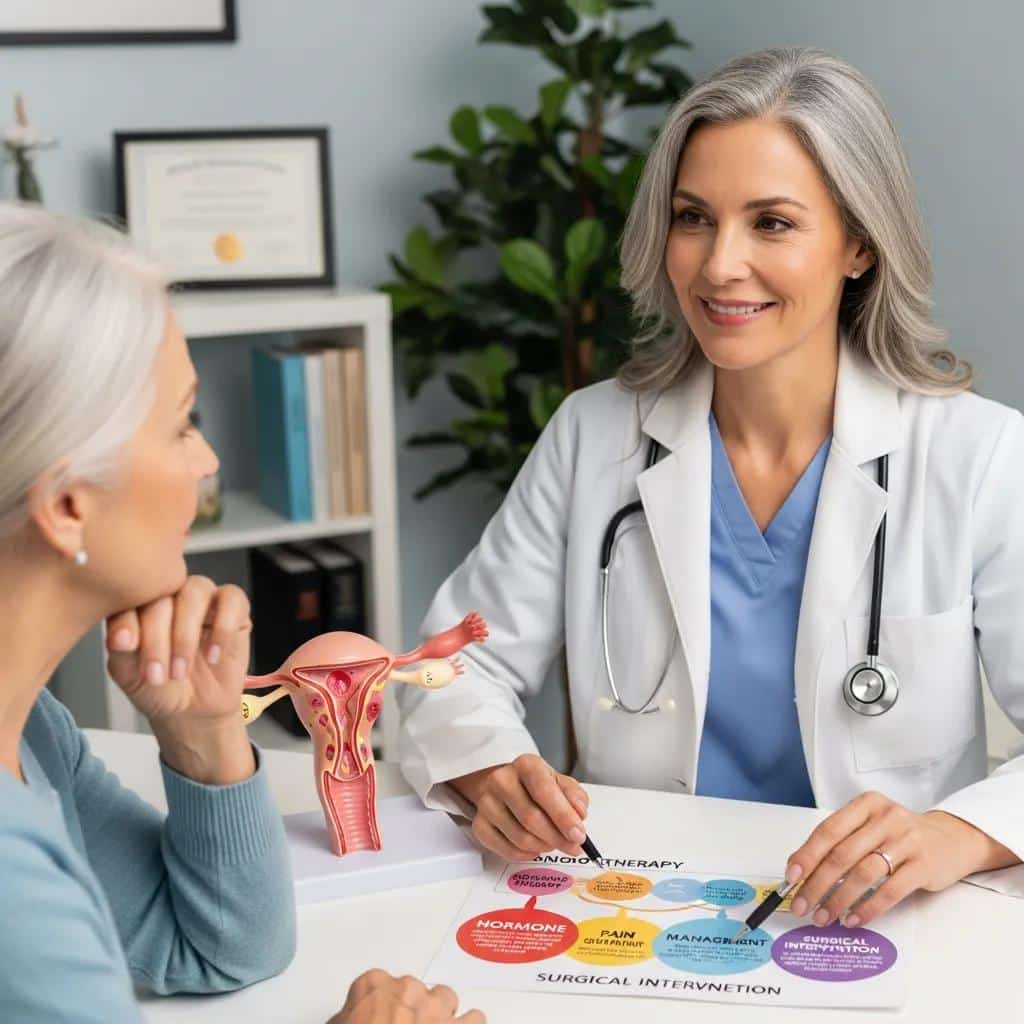
Medical management after menopause aims to control symptoms, reduce local estrogen production, and limit therapeutic risks for older patients. Options include tailored HRT approaches, aromatase inhibitors, progestins or selective agents, and non‑hormonal pain treatments. Choice depends on symptom severity, lesion burden, comorbidities (including bone health), and any concern for malignancy. When systemic hormones are considered, careful monitoring is essential. Below is a concise overview of the main therapeutic categories and how they target disease activity.
- Hormone Replacement Therapy (HRT): Individualized regimens balance relief of menopausal symptoms with the potential for lesion reactivation and should follow specialty consultation.
- Aromatase Inhibitors: Target extra‑ovarian and lesion aromatase to lower local estrogen synthesis and may shrink active disease in selected postmenopausal patients.
Clinical experience and studies support the utility of aromatase inhibitors for selected severe or refractory postmenopausal endometriosis. These agents substantially reduce estrogen synthesis at peripheral sites and within lesions and can be useful when other treatments are ineffective or inappropriate.
Aromatase Inhibitors for Severe Postmenopausal Endometriosis Treatment
Early reports and case series identified aromatase inhibitors as promising agents for endometriosis that does not respond to standard therapies. By potently inhibiting estrogen synthesis, they can reduce lesion activity in select postmenopausal patients.
Treatment of severe postmenopausal endometriosis with an aromatase inhibitor, H Sasano, 1998
The table below compares common medical therapies, their mechanisms, typical benefits, and principal considerations to support informed decision‑making.
This comparison highlights the trade‑offs between symptom control and disease suppression; shared decision‑making with a specialist helps align therapy with individual priorities and risk factors. The next sections expand on HRT nuances and the use of aromatase inhibitors.
How Does Hormone Replacement Therapy Affect Endometriosis Post Menopause?
HRT can substantially improve vasomotor and genitourinary menopausal symptoms, but it requires careful, individualized assessment in people with prior endometriosis because systemic estrogen may stimulate residual disease. Evidence suggests combined regimens that include progestin are less likely to provoke recurrence than estrogen alone. Transdermal delivery provides steady hormone levels and may carry different hepatic and metabolic effects compared with oral routes. The “estrogen threshold” approach—using the lowest effective estrogen dose alongside protective progestin when the uterus is present—guides prescribing. Patients should be monitored clinically and with imaging after HRT initiation, and decisions should be made in partnership with a clinician experienced in endometriosis care.
What Role Do Aromatase Inhibitors Play in Managing Postmenopausal Endometriosis?
Aromatase inhibitors reduce local estrogen production by blocking the enzyme that converts androgens to estrogens in peripheral tissues and within endometriotic lesions. They are considered when lesions persist or progress after menopause, when HRT is contraindicated, or as a medical strategy when surgery isn’t an option. Use requires attention to bone density, musculoskeletal symptoms, and cardiovascular risk factors; bone‑protective strategies and monitoring are commonly combined with AI therapy. Treatment duration is individualized based on symptom response and tolerability. Understanding this targeted mechanism helps clinicians and patients decide when medical suppression is a reasonable alternative to surgery.
Evidence across age groups supports aromatase inhibitors as an important option for endometriosis‑related pelvic pain, reinforcing their role in carefully selected postmenopausal patients.
Aromatase Inhibitors for Endometriosis Pain in All Age Groups
Clinical reviews have examined aromatase inhibitors in both reproductive‑age and postmenopausal women, showing benefit for endometriosis‑related chronic pelvic pain in selected patients when used with appropriate monitoring.
Aromatase inhibitors for the treatment of endometriosis, SE Bulun, 2012
Patients who need specialty evaluation or procedural planning may benefit from multidisciplinary centers that combine medical, surgical, and supportive care. Endo Excellence Center, led by Dr. Rachael Haverland (Mayo Clinic–trained, board‑certified), delivers personalized, team‑based care that includes expertise in HRT decision‑making and aromatase inhibitor protocols for complex postmenopausal cases. When individualized pharmacologic planning or surveillance is needed, specialist assessment ensures appropriate monitoring and tailored therapy.
When Is Surgery Recommended for Postmenopausal Endometriosis?
Surgery is indicated when there is concern for malignancy, persistent or progressive pain despite optimized medical therapy, obstructive symptoms from adhesions or masses, or diagnostic uncertainty that requires histologic confirmation. Minimally invasive procedures aim to remove disease, restore anatomy, lower recurrence risk, and relieve organ‑specific symptoms. Because cancer risk rises with age, preoperative planning should include an assessment of malignancy risk. The list below outlines common surgical indications and the table that follows compares typical procedures and outcomes to assist decision‑making.
- Suspicion of malignancy: Rapid mass growth, worrisome imaging features, or atypical presentation.
- Refractory pain: Severe symptoms that do not respond to medical and supportive care.
- Obstructive or organ dysfunction: Bowel or urinary obstruction or recurrent complications from endometriomas.
Radiology plays a central role in recognizing postmenopausal endometriosis, which is often under‑recognized and can present variably or be found incidentally.
Clinical Presentation, Imaging, and Management of Postmenopausal Endometriosis
Postmenopausal endometriosis is an under‑recognized entity in which radiologists can significantly contribute to diagnosis and management. This review summarizes clinical presentations, imaging findings, and management strategies, noting that endometriosis may be symptomatic or incidental and that therapies or conditions that raise estrogen exposure increase risk. In older patients, the possibility of malignancy should be considered and appropriate imaging (MRI, ultrasound) and follow‑up recommended.
Endometriosis in the postmenopausal female: clinical presentation, imaging features, and management, WM VanBuren, 2020
The table below maps common surgical procedures to their typical indications and expected outcomes to support informed consent and surgical planning.
This comparison clarifies when excision, laparoscopy, or organ removal may be appropriate and sets realistic expectations about symptom improvement and recurrence. The next sections outline the benefits of excision and the implications of hysterectomy or oophorectomy.
What Are the Benefits of Excision Surgery and Laparoscopic Procedures?
Excision—removal of endometriotic tissue down to healthy margins—is the preferred technique for definitive lesion removal because it reduces residual disease and recurrence compared with superficial ablation. Laparoscopy limits incision size, lowers postoperative pain and infection risk, and shortens recovery so patients return to activity sooner. Expert excision preserves organ function and yields tissue for accurate pathology when needed. These benefits help patients weigh specialist surgical referral against nonoperative care.
How Do Hysterectomy and Oophorectomy Impact Endometriosis Management After Menopause?
Hysterectomy, with or without oophorectomy, may be appropriate for extensive or recurrent disease or when malignant transformation is a concern. Removing the ovaries reduces systemic estrogen but can lead to surgical menopause with its own implications. Potential benefits include decreased recurrence and symptom relief; risks include surgical complications and the need for postoperative menopausal symptom management. Decisions about organ removal should reflect patient goals, medical comorbidities, and the likely need for HRT or non‑hormonal alternatives. Multidisciplinary preoperative planning and postoperative surveillance improve outcomes when surgery is undertaken.
Endo Excellence Center emphasizes minimally invasive excision and an individualized surgical philosophy delivered by multidisciplinary teams; patients gain from coordinated specialty care when complex procedures are planned.
How Can Lifestyle and Holistic Approaches Support Endometriosis Management After Menopause?

Lifestyle and integrative strategies are key adjuncts that lower inflammation, improve pain coping, and support functional recovery alongside medical or surgical care. High‑yield approaches include targeted nutrition, pelvic floor therapy, graded exercise, and stress‑management techniques. Adopting anti‑inflammatory eating patterns, optimizing sleep, and engaging in pelvic rehabilitation can reduce symptom burden and decrease reliance on medications. The bullets below list practical interventions and the rationale for their use in postmenopausal patients.
- Adopt an anti‑inflammatory diet: Focus on omega‑3 rich fish, fiber‑dense plant foods and whole grains while limiting processed items to reduce systemic inflammation.
- Pelvic floor therapy: Treats pelvic muscle dysfunction with manual techniques, biofeedback, and progressive home exercises to lower pain and improve function.
- Stress reduction practices: Mindfulness, CBT techniques, and gentle yoga help modulate central pain processing and improve coping.
To make these recommendations actionable, clinicians should pair behavioral plans with measurable goals and routine follow‑up to track symptoms and adherence. The table below lists specific lifestyle interventions, their attributes, and practical recommendations patients can start right away.
These steps are practical ways patients can complement medical or surgical care and improve overall quality of life. Multidisciplinary support—pelvic floor therapists, nutritionists, and mental health professionals—enhances recovery and functional outcomes.
Which Anti-Inflammatory Diets and Stress Management Techniques Help Postmenopausal Women?
An anti‑inflammatory eating pattern prioritizes omega‑3 sources (oily fish, flax), abundant vegetables and fruits, whole grains and legumes, and limits added sugars and trans fats to reduce pro‑inflammatory mediators linked to pain. Stress‑management approaches such as mindfulness‑based stress reduction, cognitive behavioral therapy, and restorative movement practices reduce central sensitization and improve perceived pain control when practiced consistently.
Practical tips include planning plant‑forward meals, setting aside 10–20 minutes daily for guided mindfulness, and gradually increasing low‑impact aerobic activity to boost mood and lower nociceptive sensitivity. Integrating these habits supports long‑term symptom improvement and complements clinical treatments described earlier.
What Support Systems and Therapies Improve Quality of Life After Menopause?
Peer support groups, structured pelvic pain programs, counseling for chronic pain coping, and multidisciplinary rehabilitation teams provide social, psychological, and functional resources that meaningfully improve quality of life for postmenopausal patients with endometriosis. Access to targeted services—pelvic floor physical therapy, nutrition counseling, and mental health care—addresses the multifactorial nature of chronic pelvic pain and reduces isolation. Coordinated care plans with scheduled follow‑up, measurable goals, and good communication among specialists lead to better symptom control and higher patient satisfaction.
Endo Excellence Center offers multidisciplinary supportive services—including pelvic floor therapy, nutrition counseling, and mental health resources—to help patients put these strategies into practice and to coordinate ongoing care and surveillance.
Frequently Asked Questions
What lifestyle changes can help manage postmenopausal endometriosis symptoms?
Practical lifestyle changes can meaningfully reduce symptoms. An anti‑inflammatory diet rich in omega‑3s, whole grains, fruits and vegetables while limiting processed foods helps lower systemic inflammation. Regular pelvic floor therapy addresses muscle dysfunction that worsens pain, and stress management—mindfulness, CBT techniques, or gentle yoga—improves pain coping. Combined with medical care, these approaches often enhance daily function and quality of life.
How can I differentiate between endometriosis and other pelvic conditions?
Distinguishing endometriosis from IBS, interstitial cystitis, or pelvic floor dysfunction requires careful history, focused pelvic exam, and targeted imaging. Signs that point to endometriosis include deep localized dyspareunia, pain reproduced on exam or with organ movement, and imaging findings such as endometriomas or fixed adnexal masses. When uncertainty remains, diagnostic laparoscopy may be necessary for confirmation. Early, accurate diagnosis helps avoid ineffective treatments and expedites appropriate care.
What are the potential risks of hormone replacement therapy (HRT) for women with a history of endometriosis?
HRT relieves menopausal symptoms but may increase the risk of reactivating residual endometriotic tissue because of systemic estrogen exposure. To reduce that risk, clinicians often recommend combined estrogen‑progestin regimens when appropriate, use the lowest effective doses, and select delivery routes that match patient risk profiles. Individual risk assessment and close follow‑up are essential to ensure benefits outweigh risks.
What role does surgery play in managing postmenopausal endometriosis?
Surgery is considered when malignancy is suspected, pain is refractory to optimized medical care, or adhesions or masses cause organ dysfunction. Minimally invasive excision aims to remove disease and restore anatomy, which can relieve symptoms and lower recurrence. Surgical choices should be individualized based on overall health, imaging, and patient goals, and discussed within a multidisciplinary care plan.
How can aromatase inhibitors be used effectively in treatment?
Aromatase inhibitors reduce local estrogen production and can be effective for postmenopausal endometriosis, particularly when other treatments fail or HRT is contraindicated. Their use requires attention to bone health and other side effects—so clinicians commonly pair AIs with bone‑protective measures and routine monitoring. Treatment length is tailored to clinical response and tolerability.
What support systems are available for women dealing with postmenopausal endometriosis?
Support systems include peer groups, structured pelvic pain programs, and multidisciplinary teams offering pelvic floor therapy, nutrition counseling, and mental health care. These resources provide practical tools and social support that improve coping, function, and satisfaction. Coordinated care with clear goals and regular follow‑up helps patients navigate long‑term management.
Conclusion
Knowing the range of treatment options for postmenopausal endometriosis lets patients and clinicians choose care that addresses symptoms while protecting long‑term health. Medical therapies, surgical interventions, and lifestyle strategies can be combined into a personalized plan that improves function and quality of life. Specialized, multidisciplinary care and active patient‑clinician collaboration are key when complex endocrine or surgical choices arise. Speak with your healthcare provider or a specialist to review individualized options and next steps for care.